
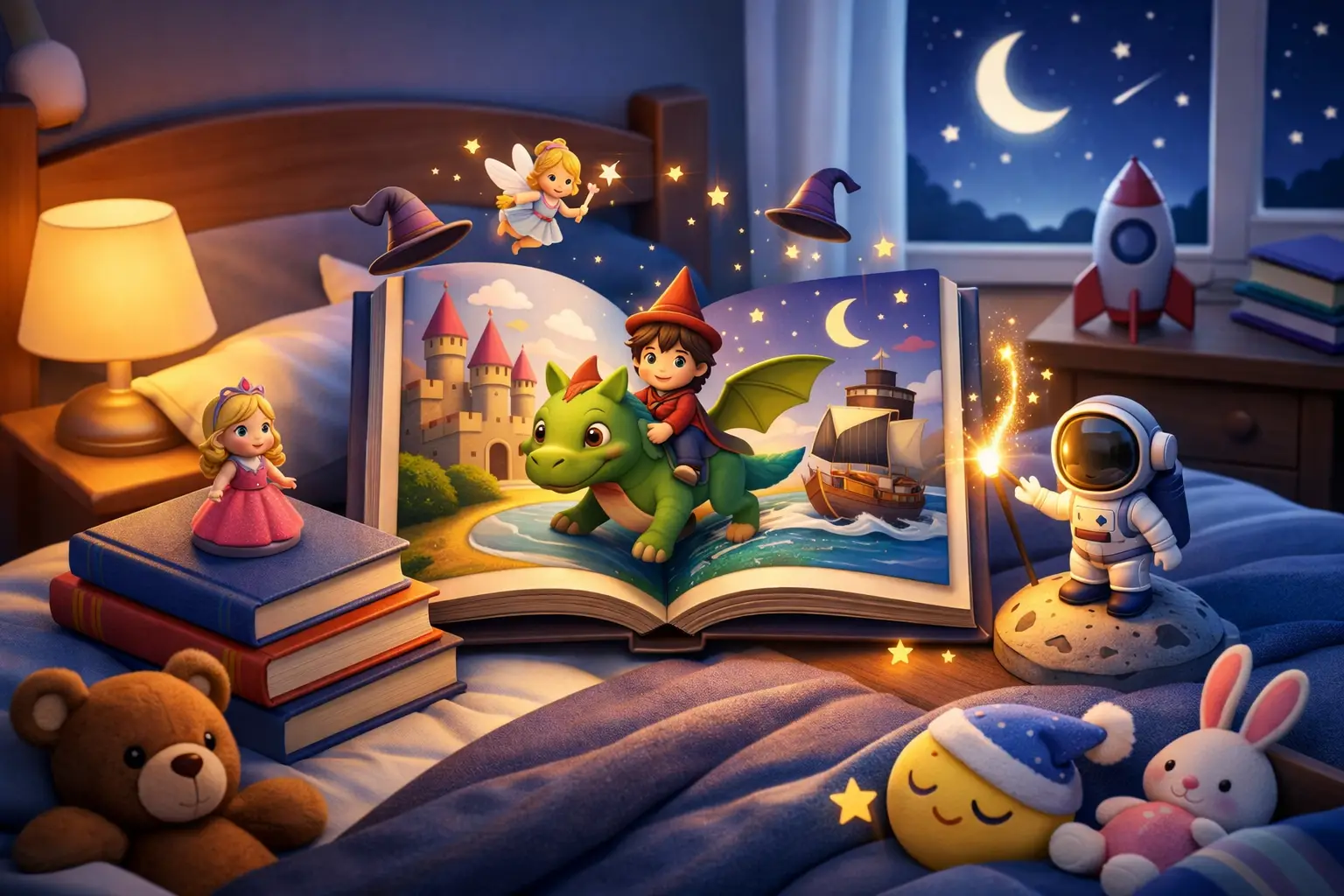
The fourth request for the same story is rarely really about the dragon, the moonlit forest or the talking fox. It is about the comfort of knowing what comes next - and the quiet delight of hearing their own name at the heart of it. Personalised books bring those two feelings together, turning a familiar bedtime ritual into a small adventure made especially for your child.
For parents and carers, this can make storytime feel less like one more task at the end of a long day and more like a moment of genuine connection. A child who is the hero is not simply listening from the sidelines. They are helping the lost star find its way home, being kind to a nervous creature or discovering that bravery can be gentle.
Why personalised books feel different at bedtime
Young children are naturally drawn to stories that help them make sense of themselves. When they recognise their name, appearance or favourite things in a tale, the story can feel closer and more believable. Their imagination has a clear place to begin.
That recognition matters at bedtime, when children are moving from the busy energy of the day towards rest. A personalised story gives them something steady to hold on to: a familiar hero, a safe world and a reassuring ending. The details may be magical, but the emotional message can be wonderfully simple: you are seen, you belong, and you can do kind and courageous things.
This does not mean every bedtime story needs a grand lesson. Often, the loveliest stories are the ones with a soft pace, a little silliness and a cosy resolution. A child may remember the friendly cloud who knew their favourite colour more vividly than any carefully stated moral.
A hero they can truly imagine
In a traditional book, a child may identify with a character over time. In a personalised story, that connection is immediate. The hero has their name and can reflect details that make them feel known. For children still finding the words for their feelings and experiences, this can make the story easier to enter.
It also gives adults a gentle opening for conversation. If the hero felt worried before a journey, you might ask whether your child has ever felt that way. If the hero helped a friend, you can notice the care they showed. There is no need to turn every page into a discussion; a single question, or simply a cuddle, is enough.
Building a calmer reading ritual
The best bedtime routine is not the most elaborate one. It is the one a family can return to, even after a late supper, a difficult day or an overstimulating afternoon. A wash, pyjamas, a story and a goodnight can become reliable signals that the day is ending.
Personalised books can make that ritual easier to protect because children are often keen to revisit them. Rather than negotiating over whether it is time to read, you can invite them back into a world where they already know they have an important role. Repetition is not a lack of imagination. For young children, it is often how a story becomes comforting.
A digital story library can be especially useful here. Families can keep favourite stories together, choose one that suits the mood of the evening and return to it without hunting through a crowded bookshelf. Some nights call for a cheerful treasure hunt; others need a quieter tale about finding a warm place to sleep.
Of course, a screen should not take over the whole routine. The value is in sharing the story, not in adding more stimulation before bed. Choose a calm setting, keep the brightness low where possible and read together at an unhurried pace. The voice a child knows and trusts is still the most magical part.
Personalisation can support confidence and empathy
When a child is cast as the hero, they get to practise seeing themselves as capable. That does not have to mean defeating a monster or saving an entire kingdom. Confidence can look like trying something new, asking for help, welcoming someone who feels left out or keeping going when a puzzle is tricky.
Stories also offer a safe distance from big feelings. A child might find it easier to talk about the hero’s jealousy, nerves or excitement than their own. That is one reason a gentle story can be so helpful after a challenging day. It lets feelings appear in a manageable form, with space for reassurance before sleep.
There is a balance to strike. Personalisation should not make every story revolve around achievement or being special above everyone else. The most meaningful tales let the hero listen, learn, share and care for others. A child can be the centre of the adventure while still discovering that friendship and kindness make the adventure better.
Choosing personalised books with care
Not all personalisation has the same purpose. A book with a name printed on the cover can make a lovely keepsake, while a flexible digital story can offer more variety for a nightly reading habit. The right choice depends on how your family reads, your child’s age and whether you want a one-off gift or an evolving collection of stories.
When choosing a service or story experience, look beyond the novelty of seeing a name on the page. Consider whether the stories are age-appropriate, calming enough for bedtime and built around positive themes. The language should feel warm rather than overly busy, and the child should have room to be curious, kind and brave in their own way.
Privacy deserves equal attention. Creating a child character may involve personal details, so parents and carers should understand what information is requested, why it is used and how it can be managed. Clear settings, straightforward privacy information and thoughtful controls are signs that a family service understands the trust it has been given.
At Serene Stories, the aim is simple: magical, personalised bedtime stories that make your child the hero, with a private story space parents can return to and manage with confidence.
Keep the experience simple
Personalised stories work best when they fit naturally into family life. You do not need to create a new tale every night or make each reading into a special event. Save a few favourites, let your child choose sometimes and keep the rhythm familiar.
If you are sharing stories with another parent, grandparent or carer, a shared tale can also provide a lovely thread of continuity. A child may hear the same adventure read in different voices, in different homes, while still recognising their own little hero at its centre.
Making room for ordinary magic
Bedtime does not need perfect lighting, perfectly behaved children or a carefully staged scene to matter. Some evenings will be rushed. Some stories will be interrupted by a request for water, a missing toy or one more question about whether owls sleep.
What children tend to carry with them is the feeling of being close to someone who made time for them. Personalised books can help create that feeling by saying, page after page, that their ideas, character and place in the family are worth celebrating.
So choose a story, settle in close and let your child be the one who follows the lantern into the woods, befriends the shy moon or finds the way home. The adventure may only last a few minutes, but the comfort of being the hero can linger long after the lights are out.