
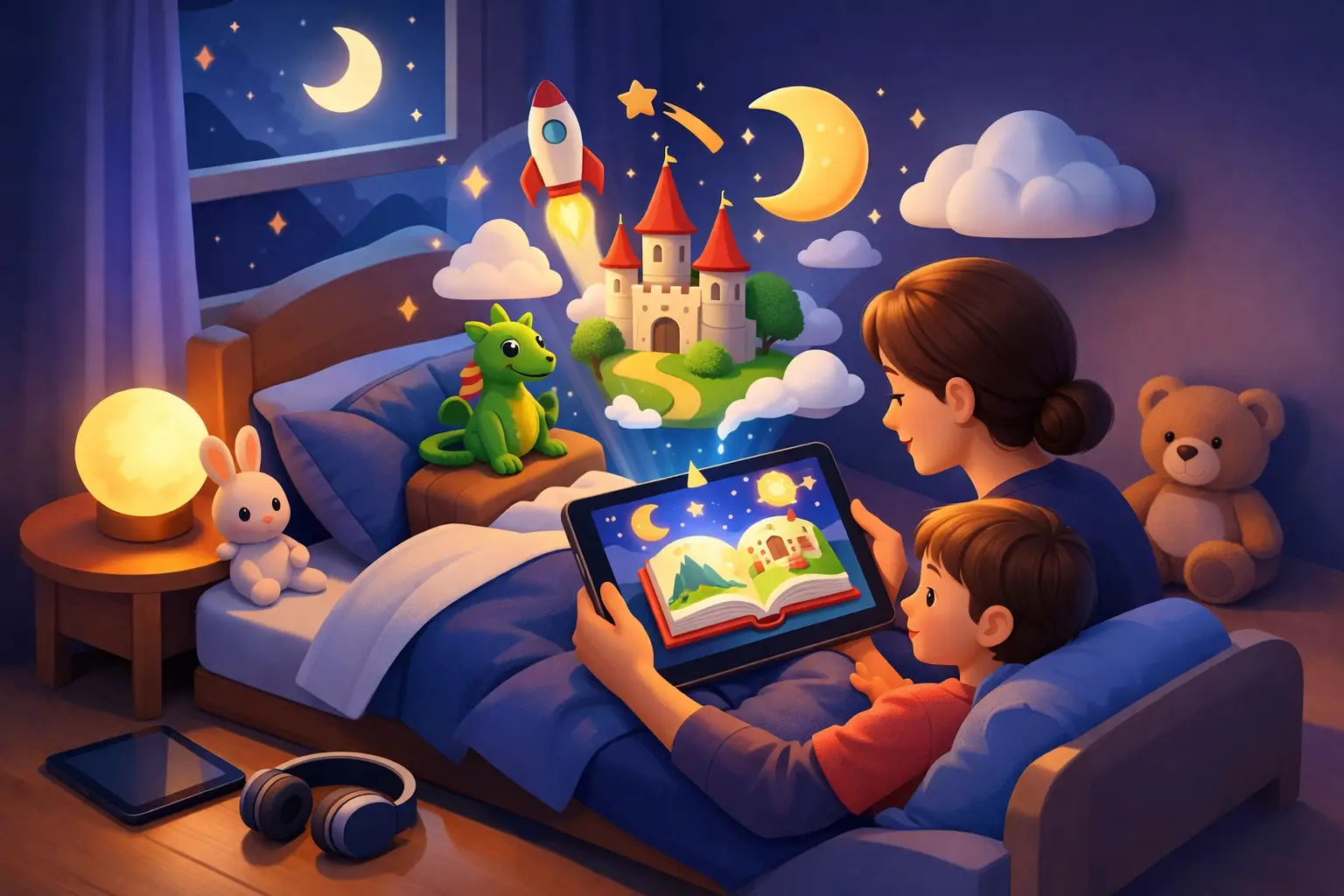
The story was nearly finished, but your child was not ready to say goodnight. Not because they wanted one more screen or one more delay, but because the brave explorer in the story had their name, their favourite yellow wellies, and a moonlit mission to help a lost fox find its way home. That is the quiet magic storytelling apps can bring to bedtime: a familiar ritual that feels freshly made for the child listening.
For parents and carers, the appeal is not simply convenience. A personalised story can help a child feel noticed, invite them into reading, and create a gentle bridge between a busy day and sleep. The best apps support that feeling without turning bedtime into another noisy, hurried digital activity.
Why personalised stories matter at bedtime
Young children often use stories to make sense of feelings, changes, and the small adventures that fill their days. When a child becomes the hero, the story can feel less like something being presented to them and more like a safe place they can step into. A shy child may enjoy helping a dragon make a new friend. A child preparing for a new nursery class may feel reassured by a character who tries something unfamiliar and finds kindness waiting.
This does not mean every bedtime story needs a lesson. In fact, a story works best when it still feels playful. A glowing forest, a sleepy whale, a secret garden or a train that travels through the stars can be enough. Personal details simply make the wonder feel closer to home.
There is also something valuable in repetition. Children often ask for the same book because knowing what comes next feels comforting. Personalised stories can offer a similar sense of security while leaving room for new adventures. Your child can remain the recognisable hero even as the setting, friends, and gentle challenges change.
What to look for in storytelling apps
Not every app that promises a custom story is designed with family bedtime in mind. Before adding one to your routine, consider whether it helps you create a calmer experience or adds more decisions, distractions, and screen time at the end of the day.
Personalisation that feels thoughtful
A child’s name alone can be delightful, but richer personalisation often creates a more memorable story. Look for options that let you shape a child character in a simple, respectful way, perhaps choosing interests, appearance details, or the kind of adventure they enjoy. The process should feel easy enough to use after a long day.
The details do not need to be exhaustive. A few well-chosen touches can make a story feel special without requiring parents to share more information than they are comfortable providing. A favourite animal, a treasured hobby, or a familiar family tradition may be all that is needed.
Stories with a gentle pace
Bedtime is different from playtime. Fast plots, startling sound effects, competitive games, and cliff-hangers can make it harder for some children to settle. Choose stories with warm language, reassuring endings, and a pace that gradually softens rather than speeds up.
It also helps to have control over story length. On a calm evening, a longer adventure may be a lovely shared experience. On a night when everyone is tired, a short story with a peaceful ending can be the better choice. Good storytelling apps make room for both.
A library you can return to
The story you made on a Tuesday night may become the one your child requests every Friday for a month. A personal story library makes those favourites easy to find again. It also gives families a small record of the stories that mattered at different ages: the dinosaur phase, the first day of school worries, the fascination with space, the year every adventure needed a friendly cat.
Look for clear ways to view, save, and organise completed stories. If a service allows sharing, that should be deliberate and easy to manage, so a grandparent or another trusted carer can enjoy the story without the process becoming complicated.
Privacy that respects children
Personalisation should never come at the expense of a child’s privacy. Parents and carers should be able to understand what information is collected, why it is needed, and how they can manage or remove it. Clear privacy settings, child-focused privacy information, and transparent account controls are signs that a platform understands the responsibility involved.
This matters even when the details seem small. A child’s name, appearance, interests, and story history are personal. Choose an app that treats them with care and gives the adult account holder meaningful control.
How to make a storytelling app part of a calmer routine
An app is most helpful when it supports the ritual you already want, rather than becoming the ritual itself. The screen can be a doorway into the story, but your voice, presence, and attention are still what make bedtime feel safe.
Start by creating a predictable order. Perhaps it is pyjamas, teeth, choosing tomorrow’s clothes, then one story together. If your child is involved in selecting the hero’s adventure before bedtime begins, you can avoid a string of last-minute choices when they are already tired. A simple question such as, “Shall we visit the cloud garden or the underwater palace tonight?” gives them agency without making the evening feel endless.
When the story begins, read it aloud if you can. Pause to admire an illustration, whisper the sound of the rain, or ask what the hero might do next. There is no need to turn every page into a discussion, especially when a child is winding down. A few shared moments are enough to make the story feel like something you experienced together rather than content that played in the background.
For families trying to reduce evening screen stimulation, consider creating or choosing the story earlier in the day, then reading it on a dimmed device at bedtime. Some parents prefer to read from a larger screen kept at a little distance, while others use the app to prepare the story and then tell it mostly in their own words. The right approach depends on your child, your household, and what helps everyone settle.
Let your child shape the adventure, within kind boundaries
Personalised stories can be a lovely way to follow a child’s imagination. If they are fascinated by ladybirds, bridges, fire engines, or the moon, those interests can become the beginning of an adventure. Listening to their ideas sends a powerful message: what you notice and love matters here.
At the same time, parents do not need to accept every request. A child may ask for a scary monster, an impossibly long story, or a plot full of exciting battles just before lights out. You can keep the boundary warm: “The monster can be a friendly one tonight,” or, “We can save the big adventure for tomorrow. This one will help our hero get cosy.”
That balance is part of what makes bedtime storytelling different from open-ended entertainment. The goal is not to keep a child engaged for as long as possible. It is to help them feel connected, soothed, and ready for rest.
When an app is not the best answer
A personalised app can be useful, but it does not replace picture books, made-up tales, library visits, or the comfort of a story told from memory. Children benefit from all of these experiences. Some evenings, their favourite printed book may be exactly what they need. On others, you may have no energy for technology at all, and a two-minute story about a rabbit looking for a pillow will do beautifully.
It is also worth noticing how your child responds. If they become frustrated by choices, overstimulated by the device, or unsettled when the story ends, simplify the routine. Use fewer options, keep sessions shorter, or return to screen-free reading for a while. The best tool is the one that serves your family, not the one with the most features.
Serene Stories is designed around this family-first idea, helping parents create magical, personalised bedtime stories where their child is the hero while keeping stories organised in a private, personal library.
A good bedtime story does not need perfect wording, a flawless routine, or a parent with endless energy. It needs a small pocket of attention and a child who knows they have a place in the tale. Whether tonight’s hero sails with sleepy penguins or carries a lantern through a starlit wood, let the final page leave them with the same gentle message: you are known, you are safe, and tomorrow holds another adventure.