
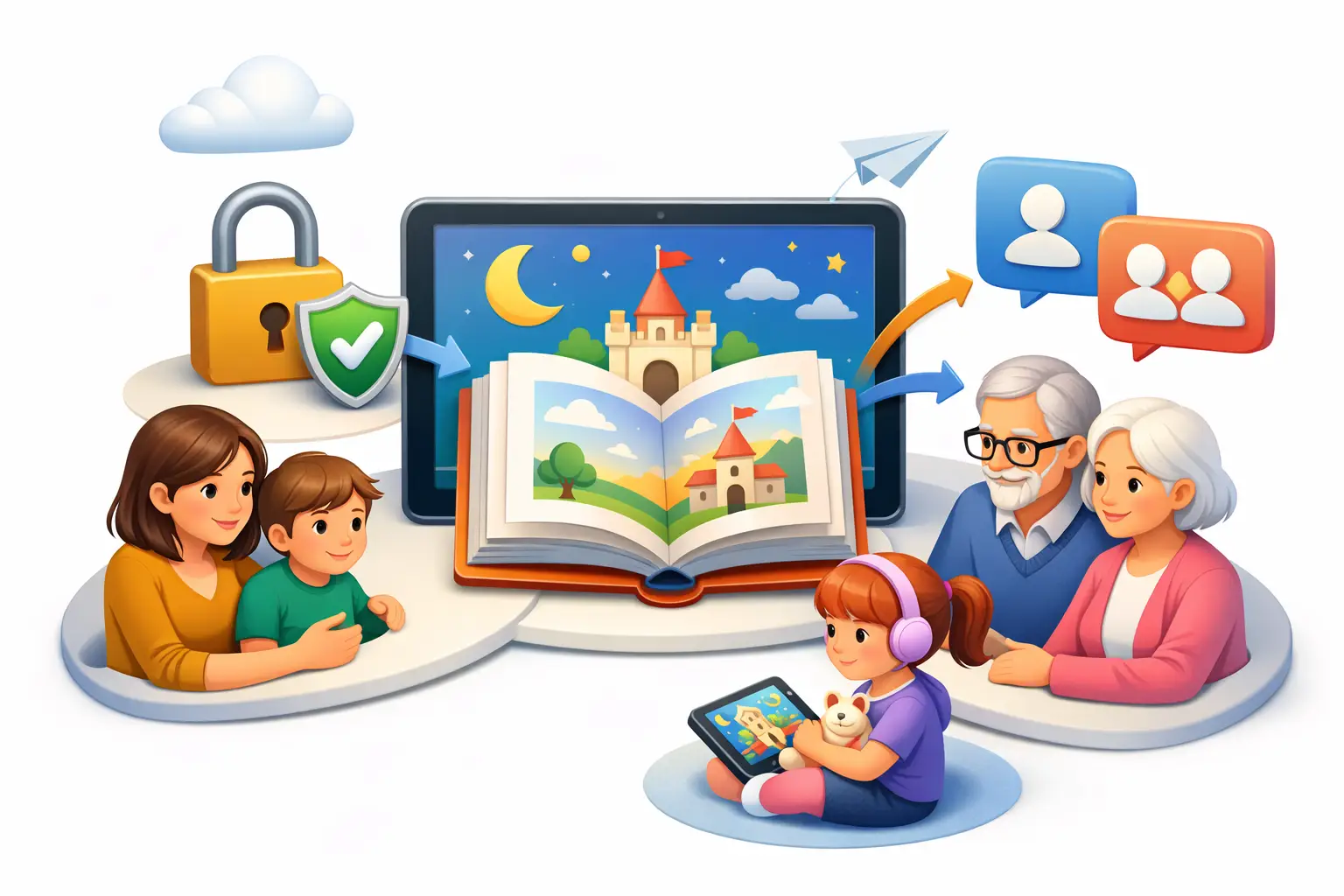
A personalised bedtime story can become part of a family’s language. A child may ask for the one where they helped a sleepy dragon find its way home, or giggle when a grandparent reads a familiar adventure in their own voice. Sharing makes those moments travel further, but it should still feel like a parent-led choice.
That is where story sharing permissions matter. They give parents and caregivers a thoughtful way to decide who can enjoy a child’s story, what they can do with it, and when that access should end. The aim is not to make sharing feel complicated. It is to keep a magical family ritual in caring hands.
Why sharing a child’s story needs a little care
A personalised story is more than a digital book. It may include a child’s name, character, favourite things, family details or the kinds of adventures that make them feel seen. Those details are what make storytime special, yet they also deserve the same care you would give a family photograph or a private message.
Parents often want to share stories for lovely reasons. A grandparent who lives far away can enjoy the same tale as the child at bedtime. A co-parent can keep the routine familiar between homes. An aunt, uncle or close family friend can read a story during a sleepover. These are meaningful uses, especially when a story helps a child feel connected to the people who love them.
Still, not every story needs to be shared in the same way. One family may be happy for several relatives to view a tale, while another may prefer stories to stay between parents and one trusted caregiver. Good sharing controls make room for both choices without judgement.
What story sharing permissions should help you decide
The clearest sharing experience begins with simple questions: who is receiving the story, how much access do they need, and for how long? A parent should not have to hand over broad account access just so someone can read one bedtime adventure.
Choose the right people, not the widest audience
For most families, sharing works best when it is intentional. Sending a story directly to a named, trusted person is very different from making it available to a large group or public audience. A small circle gives parents more confidence that a child’s personalised details are being treated respectfully.
Before sharing, consider whether the recipient is someone you would comfortably invite into your child’s bedtime routine. If the answer is yes, a story can be a warm way to include them. If the relationship changes or the sharing no longer feels right, access should be easy to reconsider.
Match access to the moment
Not everyone needs the same permissions. A grandparent might simply need to view a finished story and read it aloud. A co-parent or regular caregiver may need access to more than one story so they can keep a familiar routine going. Someone helping to create stories may need a different level of involvement again.
The helpful principle is to share only what is needed for the purpose. Viewing a story is not the same as changing a child profile, creating new stories, or managing account settings. Keeping those actions separate helps preserve the parent’s role as the decision-maker for their child’s experience.
Keep sharing temporary when that feels right
Some sharing is ongoing: perhaps a child has a grandparent who reads to them every Sunday evening. Other sharing is for one occasion, such as a birthday message, a holiday visit or a night when a trusted babysitter is helping with bedtime.
Temporary access can be reassuring in these moments. It allows a loved one to enjoy the story without creating a permanent open door. Even with long-term sharing, it is wise to revisit who has access from time to time, particularly after a change in family routines, devices or relationships.
A gentle checklist before you share
You do not need to turn storytime into a security exercise. A brief pause before sharing is usually enough. Ask yourself whether the story contains details you would prefer to keep within the family, whether the recipient will use their own secure device, and whether they understand that the story is for private enjoyment rather than posting elsewhere.
It can also help to tell a recipient what makes the story personal. A simple note such as, “This one includes her character and favourite bedtime animal, so please keep it just for family,” sets a clear and kind expectation. Most loved ones will appreciate the guidance.
If you are sharing with a younger family member who has their own device, an adult should remain involved. Children’s stories are made to spark imagination, not to place the responsibility of digital sharing on a child.
Sharing with family across different homes
For separated parents, blended families and households with several regular caregivers, a shared story library can bring welcome continuity. The same brave hero can have an adventure at Mum’s house one night and return for another chapter at Dad’s the next. That familiarity can be particularly comforting when routines are changing.
The trade-off is that families may have different expectations about privacy, story choices and screen time. It helps to agree on the basics early: which adults can access stories, whether new stories can be created for a child, and how personal details should be handled. A calm agreement protects the child’s experience and avoids turning a small bedtime joy into a source of uncertainty.
When different households do not agree, less sharing may be the kinder option. A child can still enjoy personalised stories in each home without every story being available everywhere. Privacy is not a barrier to connection; it is part of creating a safe space for it.
When it makes sense not to share
There is no obligation to share every finished tale. Some stories may reflect a child’s worries, a family transition or a moment they are working through with a parent. A story about starting nursery, missing someone or finding courage in a new situation may be most meaningful when it remains within a close circle.
Children also grow and change. What felt sweet to share when they were four may feel more private when they are older. Parents can model respect by treating a child’s personalised character and stories as something worth asking about, rather than something automatically passed around.
If you feel unsure, choose the more private option for now. You can always share later. Once a story has been copied, forwarded or posted, bringing it back into a smaller circle can be difficult.
Helping loved ones share responsibly
A trusted recipient does not need a long set of rules. They do need a clear understanding that a personalised story belongs to a child’s family experience. Encourage loved ones to enjoy it directly with the child - reading together on a video call, saving it for a visit, or making it part of a familiar bedtime chat.
It is also reasonable to ask them not to forward screenshots, post excerpts on social media or share the story beyond the people you have chosen. This is not about suspicion. It is about recognising that a child’s name, character and little details deserve the same quiet care as any other part of their life.
Serene Stories is designed around the idea that children should feel like the hero of their own magical bedtime adventure. Thoughtful permissions help keep that adventure personal, while still leaving room for grandparents, carers and other loved ones to be part of the magic.
Review access as routines change
Sharing settings are easiest to manage when they are treated as an occasional family check-in, not a one-time decision. A new phone, a new caregiver, a move between homes or a change in a child’s confidence around privacy can all be good reasons to take another look.
Reviewing access does not mean something has gone wrong. It simply reflects that family life moves. The people who make bedtime feel safe and joyful may change over time, and your sharing choices can change with them.
The best shared story is one that leaves everyone with the right feeling: a child feels celebrated, a loved one feels included, and the parent knows the story has been shared with care. That quiet confidence leaves more space for the part that matters most - one more page, one more cuddle, and a hero ready for sleep.