
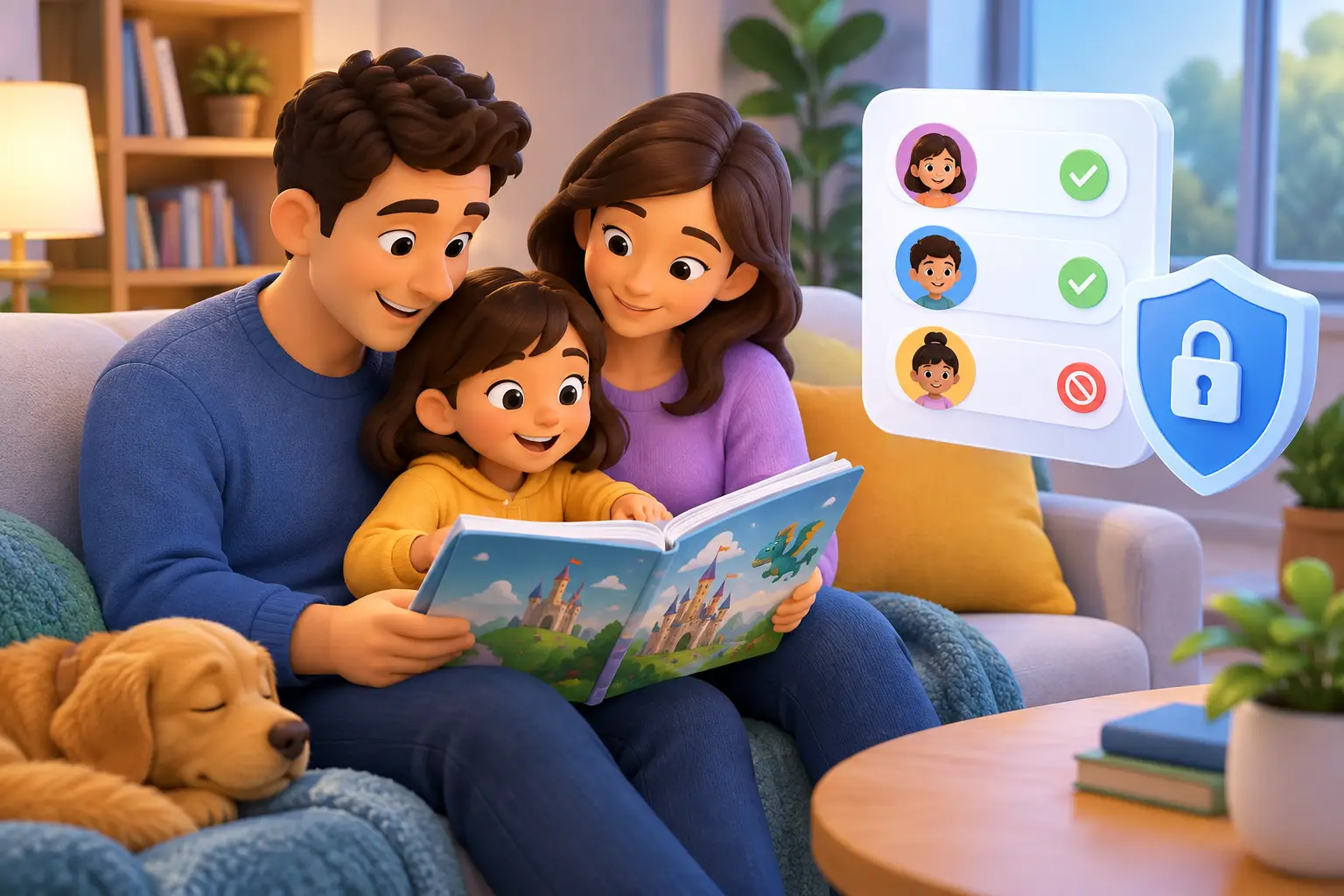
A bedtime story can travel further than the bedroom. A grandparent may want to read it during a sleepover, a parent may save it for another carer, or a child may ask to hear their brave adventure again and again. Story permission controls help keep those happy moments in the right hands, while giving parents and guardians a clear say in how a child’s personalised stories are accessed and shared.
For a family, this is not just a settings-page detail. When a story includes a child’s name, character, favourite things or familiar family touches, it deserves the same thoughtful care as a photo album on the shelf. The aim is not to make storytime feel complicated. It is to make sharing feel considered, private and reassuring.
What are story permission controls?
Story permission controls are the choices that determine who can view, share, edit or manage a personalised story. They can apply to an individual tale, a child character, or the family story library as a whole.
In practice, good controls answer simple questions: Who can open this story? Can they send it to someone else? May another adult make changes? What happens if a sharing choice needs to be withdrawn later?
For children’s stories, permissions should be designed around the adult who is responsible for the child. Young children should be free to imagine themselves sailing through moonlit skies or helping a shy dragon find its roar. They should not have to understand account access, sharing settings or the consequences of passing personal information around.
Why permissions matter for personalised stories
A generic paperback can be handed from one family to another without revealing much about its reader. A personalised bedtime story is different. Its magic often comes from the details: the hero’s name, appearance, interests, perhaps the people and places that make their world feel familiar.
That is exactly why families deserve meaningful control. A parent might be delighted to share a story with a trusted auntie who lives far away, but prefer not to send it through a large group chat. Another family may want two carers to have full access to the bedtime library, while keeping story creation and character changes with one account holder.
Neither approach is more loving or more sensible. It depends on family routines, the child’s age, and who helps with bedtime. Permission controls make room for those differences without asking families to choose between personalisation and privacy.
Sharing is not the same as giving full access
One of the most helpful distinctions is between letting someone enjoy a finished story and allowing them into a family’s story space.
A grandparent may only need permission to view a particular tale. A co-parent or regular carer may need access to several saved stories so bedtime can stay familiar wherever the child is sleeping. Editing a child’s character details or creating new stories is a different level of responsibility again.
When these choices are separated, sharing can stay warm and practical. A relative receives the magical adventure they are meant to enjoy, without needing access to every story, profile or family setting.
A gentle approach to setting story permissions
The best time to think about permissions is before a story is shared widely. It only takes a moment to pause and decide what would feel right for your family.
Start with the purpose of sharing. Are you sending one story to a grandparent for a special occasion? Helping a trusted carer continue the bedtime routine? Or building a shared library with another parent or guardian? The purpose often makes the appropriate level of access obvious.
Next, consider the person receiving it. Trust matters, but so does practicality. Someone who simply wants to read a story does not need the same access as someone who helps create them. Keep permissions as narrow as they can be while still making family life easier.
Finally, revisit choices when circumstances change. A nursery routine, a new babysitter, a family holiday or a child growing more aware of their digital world can all be useful prompts. Permissions do not need to be permanent to be kind. They should be easy to review and adjust as your family does.
Story permission controls that support calmer routines
Thoughtful settings are most useful when they support the rhythm of real evenings. Bedtime is rarely the moment to search for a forgotten password or wonder whether a story has been sent to the right person.
A few habits can keep things simple:
- Give viewing access only to adults who are meant to read the story with your child.
- Reserve editing rights for the people responsible for the child’s character and story choices.
- Share individual stories when a wider invitation is unnecessary.
- Check your library and sharing choices occasionally, especially after changes in caregiving arrangements.
- Use a secure account and keep sign-in details private, even within a busy household.
These are not rules for getting every decision perfect. They are small ways to protect the cosy feeling storytime is meant to have. A well-organised story library also means less time looking for the right adventure and more time listening to the important question: “Can we read that one again?”
Let children have a voice, without giving them the burden
As children grow, they may have opinions about who hears their stories. A child might love the idea of their uncle reading about their underwater treasure hunt, but feel shy about it being shared with classmates or a wider audience.
Listening to that preference is a valuable part of digital care. It helps children learn that their stories, names and ideas matter. At the same time, the adult remains responsible for the final decision about access and sharing.
A simple conversation can be enough: “Would you like Nana to read this story too?” It keeps the focus on excitement and choice, not on worrying a child with technical details. Over time, these moments can help build a healthy understanding of personal boundaries.
Privacy should feel clear, not hidden
Family-safe permission controls should use plain language. Parents and guardians should be able to see what a choice means before they make it: whether someone can view one story or the whole library, whether they can make edits, and how access can be removed.
Clarity is especially important when a service stores details connected to children. Families should not have to hunt through confusing menus to understand who can see a child’s personalised adventures. The more transparent the control, the easier it is to use with confidence.
Serene Stories is built around the idea that a child can be the hero of a magical bedtime tale while the grown-ups caring for them remain in charge of their digital story space. Personalisation feels most special when it is paired with care.
When less sharing is the right choice
There is no prize for making every story available to everyone. Some stories may include a child’s current worries, a family milestone or a detail that feels especially personal. Keeping these within the immediate household can be a thoughtful choice.
Equally, some families will happily share stories with a close circle of carers and relatives. The deciding factor is not how many people receive a story. It is whether the sharing feels intentional, useful and comfortable for the family.
If you are uncertain, begin small. Share one completed story with one trusted person, then see how it feels. You can always widen access later. It is much easier to offer another story than to wish a personal one had stayed private.
A personalised tale is a little piece of childhood, made for the people who will treasure it. Give it the same gentle thought you give the bedtime cuddle, the night-light and the final page turned before sleep. The right permission choice leaves room for wonder, while keeping your child’s story safely close.