
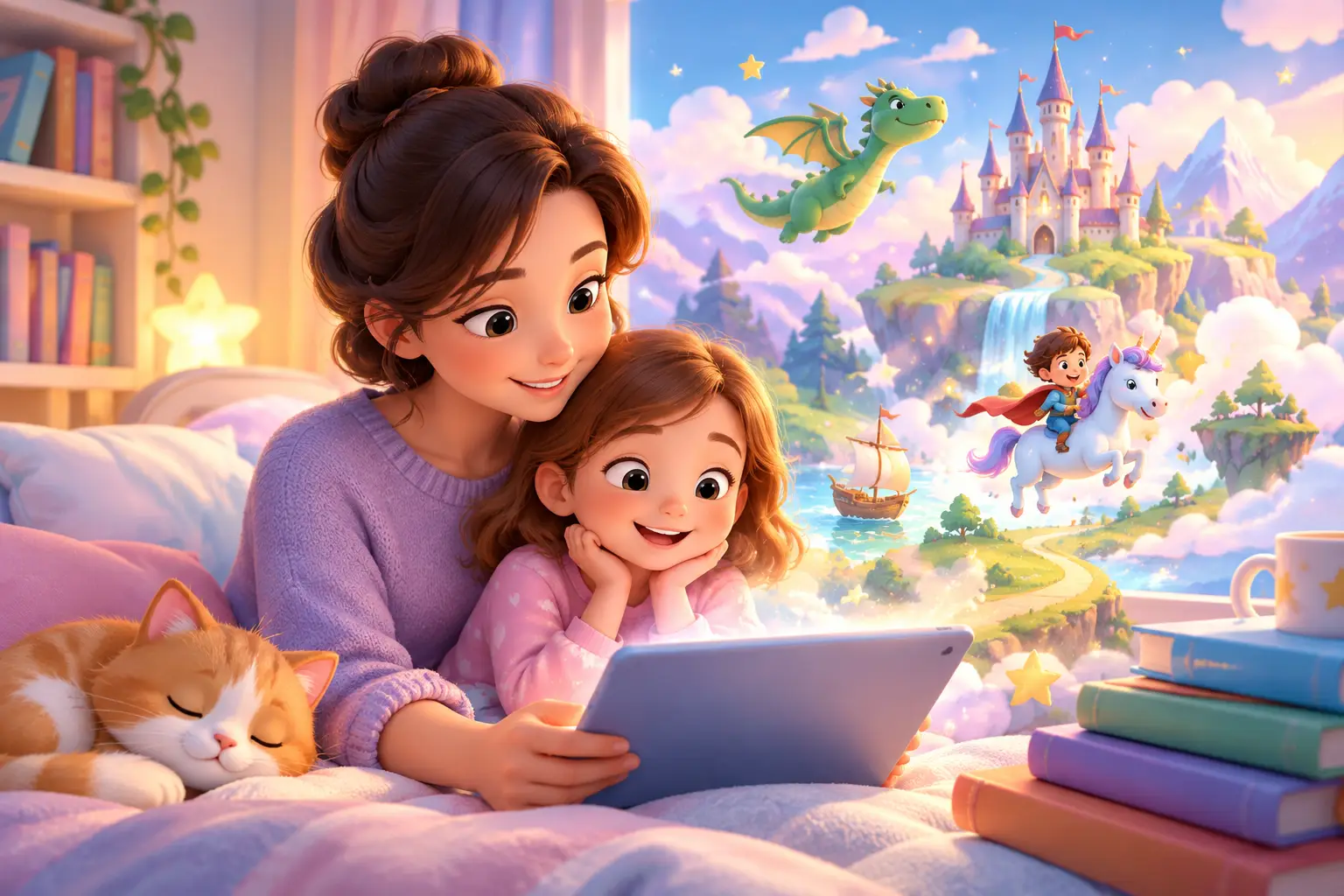
A good story creator review should look beyond colourful illustrations and a child’s name on the cover. The real question is quieter: will this story help create a warm moment of connection at the end of the day? For many families, a personalised adventure can give children a lovely way to see their worries, wishes and brave ideas reflected in a safe, imaginative world.
Personalised stories are not meant to replace a well-loved paperback, a chat on the edge of the bed or a parent’s own made-up tale. They offer another way to make story time feel personal - especially when a child is facing a new classroom, a friendship wobble, a move, a new sibling or simply a tricky bedtime feeling.
What makes a story creator worth choosing?
The best story creators make the child feel like more than a name inserted into a template. They create room for a child’s personality, favourite things and everyday experiences to shape the adventure. A child who loves sea creatures might become the hero of an underwater rescue. A child feeling unsure about joining in at school might meet a kind group of woodland companions and find their own gentle way forward.
That difference matters. Children often enjoy stories most when they can recognise a little piece of themselves, while still having enough magic and distance to explore an experience without feeling put on the spot. The adventure should remain fun first, not feel like a lesson disguised as a bedtime book.
A thoughtful service also gives parents control over the details. You may want to choose the hero’s name, appearance, interests and the kind of challenge that appears in the story. Just as importantly, the choices should feel simple. Bedtime is rarely the ideal time for a long form or a complicated set-up process.
Personalisation should feel meaningful, not mechanical
A personalised story can be wonderfully specific without recording every detail of a child’s life. Look for choices that help the story feel familiar: favourite animals, hobbies, colours, places to explore or a challenge the child can approach in an age-appropriate way.
There is a balance here. Too little personalisation can make the story feel generic. Too much can make it feel overly literal, particularly if a child has had a difficult day. Sometimes a gentle parallel is more comforting than a direct retelling. A story about a tiny dragon learning how to ask for help may open a conversation more naturally than one that repeats a playground problem word for word.
It also helps when a creator leaves room for children to be different from one another. One child may delight in a silly moon mission; another may prefer a peaceful garden mystery. A useful story experience respects both, rather than suggesting there is one right sort of hero.
A story creator review: the details parents should check
Before creating stories for your family, it is worth considering the experience around the story as carefully as the story itself. These practical details often decide whether a service becomes part of a cherished routine or something used once and forgotten.
Stories should suit the moment
For bedtime, pace is as important as plot. Look for stories with a calm, reassuring arc, a satisfying ending and language suited to your child’s age. Children aged three to five may enjoy shorter adventures with clear, comforting ideas and repeated phrases. Older children may be ready for richer worlds, more choices and a little more mystery.
It depends on the child, of course. Some six-year-olds still adore a short, cosy tale, while some four-year-olds want to hear every detail of an elaborate quest. The most helpful creators allow families to choose a story that fits their evening, rather than demanding a certain length or mood.
The emotional tone deserves attention too. A story can acknowledge nerves, frustration or loneliness without making those feelings frightening or overwhelming. The hero does not need to become fearless or perfect by the final page. Often, it is enough for them to find a kind companion, try a small next step or remember something they are good at.
Illustrations and language should invite children in
Young readers notice when an image does not match the words, or when a character looks unlike the hero they imagined. Clear, friendly illustrations help children follow the adventure and return to it again. They should feel magical and expressive, without becoming overly busy or startling near bedtime.
Language matters just as much. A warm narrator, imaginative settings and gentle humour can make a story a pleasure to read aloud. Avoid creators that rely on awkward repeated phrasing or stories that sound as though they were written for adults rather than children.
If your family speaks more than one language, availability can be a meaningful consideration. Seeing a familiar story in English, French, Spanish, German or Italian may make sharing easier across households and generations. It can also give grandparents and relatives a lovely way to join in with a child’s favourite adventure.
A library makes repeat reading easier
Children rarely treat a beloved story as a one-time experience. They revisit favourite scenes, ask for the same character voices and remember tiny details adults have forgotten. A personal story library is therefore more than a tidy feature. It helps families keep special adventures together, ready for the nights when only that particular story will do.
Look for a clear way to view completed stories, return to earlier creations and keep stories connected to the right child profile. If sharing is available, it should be straightforward and considered, so a parent or caregiver can choose when a story is passed on to a grandparent, co-parent or another trusted family member.
This is also where personalised digital stories can sit happily alongside physical books. A shelf may hold familiar classics and borrowed favourites, while a digital library holds adventures made for a particular birthday, first day of school or rainy Sunday afternoon. Both can have a place in a family’s reading life.
Privacy is part of the bedtime routine
Whenever a service holds information connected to children, parents deserve clear answers. A responsible story creator should explain what information is used to create stories, how parents can manage profiles and settings, and where to find its privacy and children’s privacy information.
You should be able to make choices with confidence, not search through confusing pages to understand them. Check whether account settings are easy to find, whether child details can be managed, and whether sharing is under the adult account holder’s control. A gentle, family-centred experience includes respect for privacy from the beginning.
Where Serene Stories fits
Serene Stories is designed around magical, personalised bedtime stories in which a child can take centre stage as the hero. Families can create child profiles, shape stories around individual interests and experiences, save completed adventures in a personal library and share them with trusted people.
Its strongest appeal is the way it turns familiar childhood moments into imaginative possibilities. Rather than presenting a child as a problem to be fixed, the stories can offer them a caring role in an adventure: helping a nervous starlight creature find its way, bringing together a group of mismatched explorers, or discovering that a small voice can still make a difference.
That approach will suit families who want bedtime stories to prompt gentle conversation as well as delight. After reading, there is no need for a formal discussion. A simple question can be enough: “Which part did you like best?” or “What would you do if you met that character?” Children often share more when they are talking about a hero first.
Choosing the right fit for your family
No story creator will suit every household in exactly the same way. A family looking for quick, cheerful adventures may prioritise speed and simplicity. Another may want more character detail, a larger saved collection or stories available in the languages spoken at home. If a child is especially sensitive to certain themes, it is sensible to create stories with a calm setting and familiar interests before trying bigger adventures.
The best choice is one that feels easy to return to. It should support the rhythm you already have, whether that means one story before lights out, a weekend tale shared with a grandparent, or a special adventure before a new milestone. Personalisation is most meaningful when it gives a child the lovely feeling that this story was waiting just for them.
Tonight, you might ask your child one small question before choosing a tale: “If you could be the hero anywhere, where would you go?” Their answer may be the beginning of a new family favourite.