
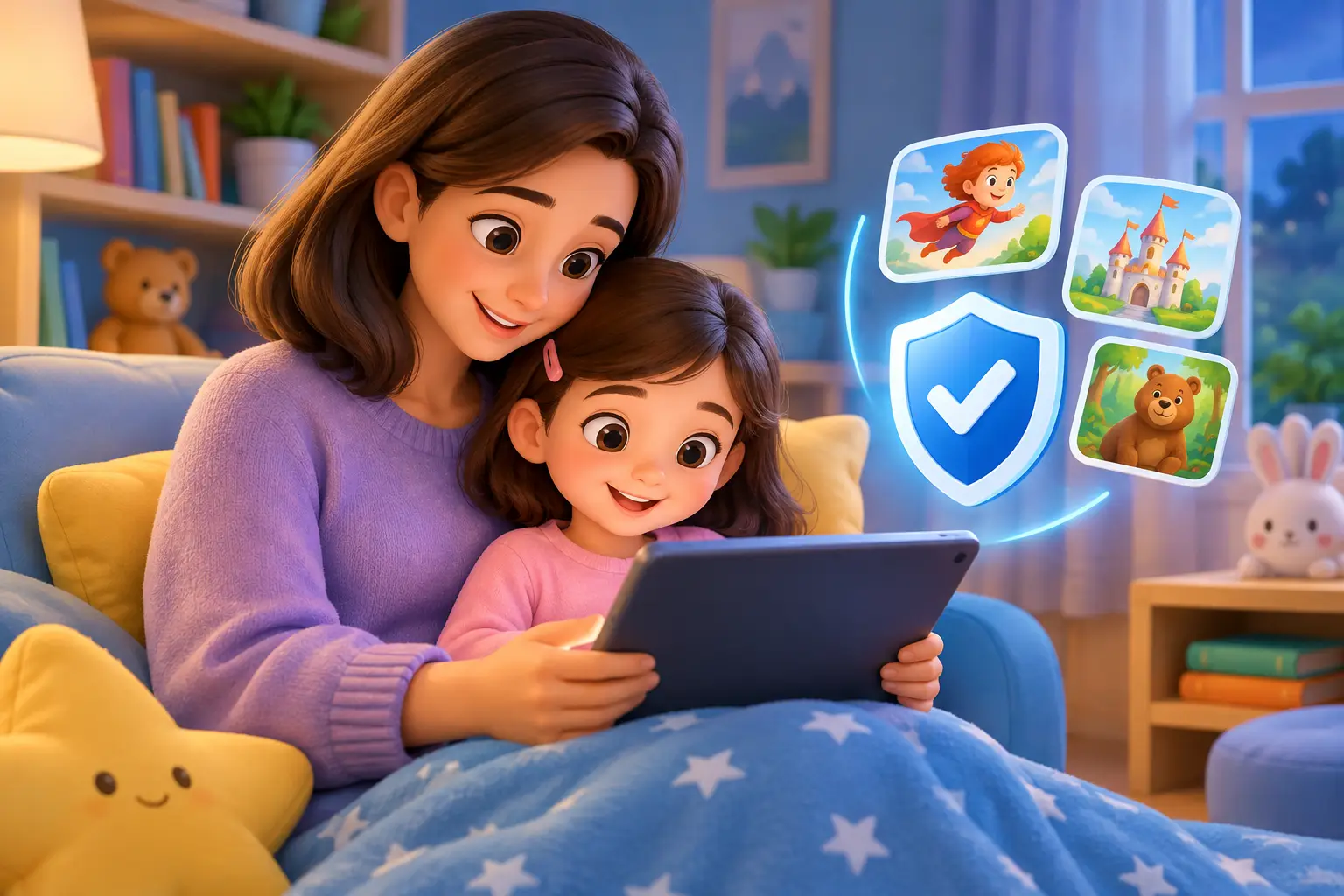
A bedtime story should not come with a parent’s quiet worry about adverts, unexpected videos, or who can see a child’s information. When little ones are winding down, the best digital story experiences feel just as reassuring as choosing a beloved book from the shelf: gentle, familiar, and made with care.
Safe story apps for children can be a lovely part of a family’s evening routine. They can help you find fresh stories when you are short on ideas, give a reluctant listener something to look forward to, and create space for a child to see themselves as brave, kind, curious, and capable. But safety is not one setting hidden behind a password. It is built into the whole experience, from the first sign-up screen to the moment a story is shared or saved.
What makes a story app feel safe?
A child-friendly badge alone is not enough. Parents and carers need an app that respects the difference between content made for children and a digital space that genuinely protects them.
Start with the stories themselves. Age-appropriate storytelling does not mean every tale must be flat or overly sweet. Children enjoy a little mystery, a daring journey, and the satisfying feeling of overcoming a problem. The key is whether the tone remains emotionally secure. A story can feature a stormy forest or a grumpy dragon without leaving a young child frightened at lights-out.
Look for clear information about the intended age range and the kinds of themes a service includes. If an app uses automatically generated stories, it should also have thoughtful guardrails around language, imagery, and subjects. The experience should invite imagination, not leave parents guessing what might appear next.
Safety also means freedom from distraction. Bright banners, autoplay clips, pop-ups, and pressure to buy can quickly turn a peaceful story into a restless bit of screen time. A well-designed story app keeps the child’s attention on the narrative and makes the adult’s choices clear.
Privacy matters as much as the story
Personalised stories can feel magical because a child becomes the hero. Their name, favourite animal, hairstyle, interests, or family details can make an adventure feel wonderfully close to home. Yet that same personal touch asks parents to consider what information is being collected and why.
Before creating a profile, take a moment to read the privacy information in plain language. A trustworthy service should explain what details it collects, how those details are used, how long they are kept, and how you can change or remove them. You should not have to hunt through confusing screens to find out whether a child’s information is used for advertising or passed to another company.
For young children, less information is usually better. A first name or a parent-created character may be enough to make a story feel special. There is rarely a good reason for a bedtime app to ask for precise location data, a child’s contact details, access to a camera, or a public profile.
It is also worth checking who controls the account. Parents and carers should be able to manage child profiles, review saved stories, update details, and delete an account when needed. These are not fussy extras. They are part of treating family information with the care it deserves.
Personalisation without oversharing
The most meaningful details are often the simplest. Perhaps your child loves yellow wellies, knows every dinosaur name, or hopes to visit the moon. Those small touches can turn a familiar bedtime tale into an adventure they ask for again and again.
Choose an app that lets you decide what goes into the story. You may want to use a nickname, a made-up character name, or broad details such as a favourite colour rather than adding information that feels too personal. Good personalisation gives the grown-up control and gives the child a glowing sense of being seen.
How to assess safe story apps for children
A quick check before downloading can save a great deal of frustration later. Think about the app as you would a new babysitter or a new book series: does it feel transparent, calm, and appropriate for your family?
First, explore the app’s settings and support pages before handing over the device. Can you see how to manage profiles? Is there a straightforward explanation of sharing? Are privacy choices easy to find? If basic safety information feels hidden, that is useful information in itself.
Next, try a few stories together. Listen for the pacing as well as the words. Does the language feel kind? Is the plot suitable for bedtime? Does the story give children room to imagine, or does it race from one noisy moment to the next? An app may be perfectly appropriate in the afternoon but still too stimulating for the final ten minutes before sleep.
Finally, consider the business model. Free services sometimes rely on advertising, data collection, or frequent prompts to upgrade. Paid services are not automatically safer, but a clear subscription or purchase model can be easier to understand than one built around constant interruptions. What matters is that the app is honest about what families receive and what it asks for in return.
Keep the grown-up at the heart of storytime
Even the gentlest app works best as a companion to connection, not a replacement for it. A child might tap through a story independently now and then, especially on a busy evening, but the bedtime magic often happens in the pauses. It is in asking, “What do you think the fox will do?” or hearing your child whisper, “I would help the little star.”
Reading together also helps you notice what lands well. One child may find a friendly ghost hilarious; another may prefer stories about baking, gardens, or a lost mitten finding its way home. Their reaction tells you more than an age label ever can.
If you use a phone or tablet, set a natural finish line. One story, then the device rests outside the bedroom. Lower the brightness, turn off notifications, and avoid letting the app roll into another activity. These small boundaries protect the calm you are trying to create.
Sharing stories with care
A story created for a grandparent or another trusted carer can be a beautiful gift. Before sharing, check whether the story contains a child’s full name, photo, school, or other identifying details. Share only with people you know, and make sure you understand whether a shared story can be viewed publicly or only by the person who receives it.
Private family sharing is very different from posting a child’s story on a social platform. The first can build connection across distance; the second may create a digital footprint your child did not choose. When in doubt, keep the adventure in the family library.
Choosing calm over more screen time
Parents are often told to think of digital experiences as either good or bad. Bedtime is more nuanced than that. A thoughtfully chosen story app can support reading, language, imagination, and closeness. It can be especially helpful when a child wants the comfort of the same ritual but you need a new tale to keep it engaging.
The trade-off is that screens can make it harder for some children to settle. If your child becomes more alert after using a device, consider reading the story aloud from your own screen while they listen, or use the app earlier in the evening and finish with a printed book, cuddle, or quiet chat. The right approach depends on your child, your routine, and what helps your household feel peaceful.
Serene Stories is designed around that gentler possibility: magical, personalised bedtime stories that make your child the hero, with family-focused controls and an organised library for the tales you create together.
The safest choice is not necessarily the app with the most features. It is the one that lets you feel present, informed, and in control while your child gets to wonder what adventure awaits tonight. Choose stories that protect their privacy, honour their imagination, and leave room for the warmest part of bedtime: being close enough to hear them say, “One more story, please.”