
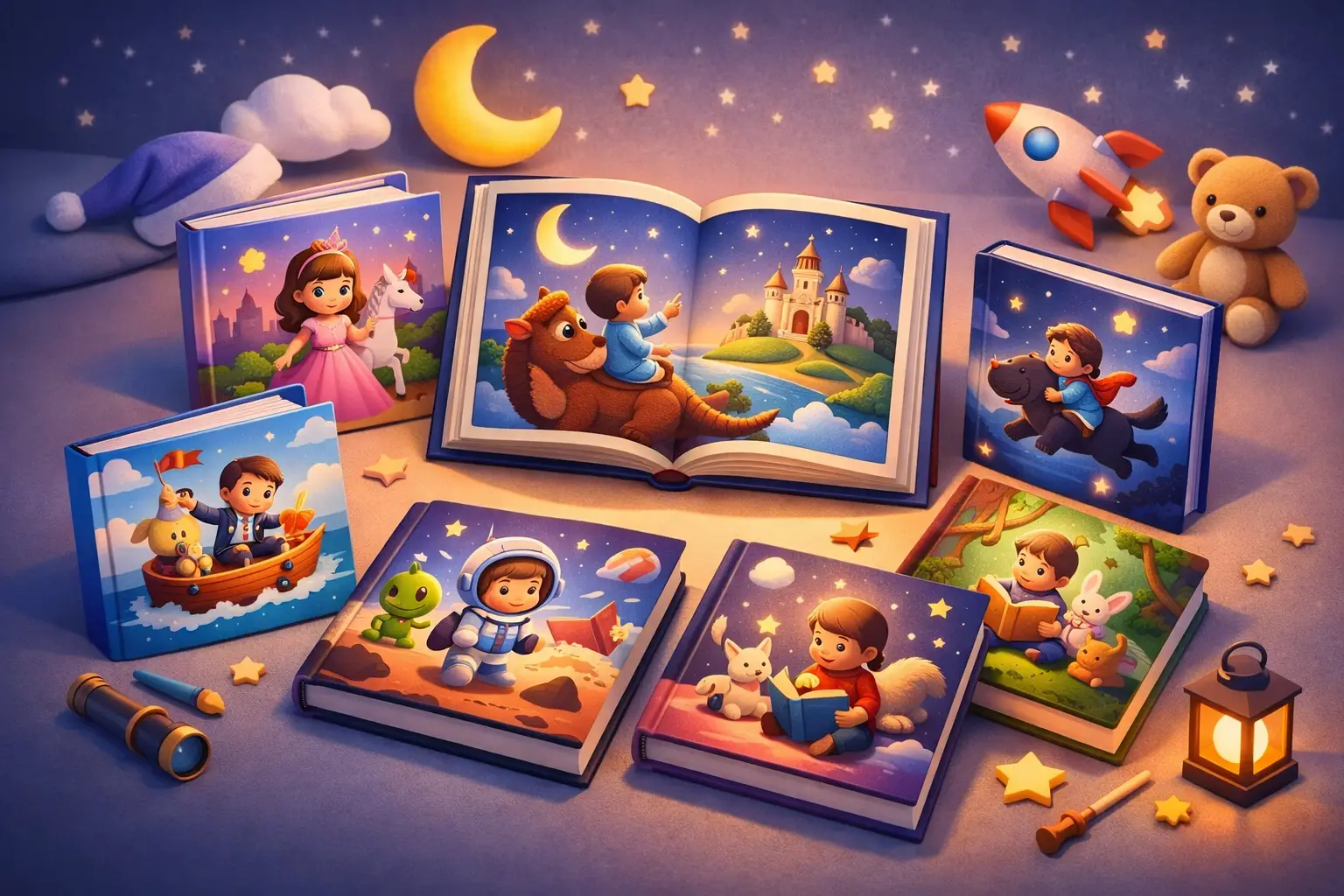
The moment the lights go low is often when a child wants one more thing: one more drink, one more cuddle, one more story. Personalised storybook examples can make that final story feel less like a delay and more like a comforting part of the evening, because the child is not simply listening to an adventure. They are the hero at its heart.
A familiar name, a beloved toy, or a small detail from the day can transform a bedtime tale into something children return to with real affection. The best personalised stories do not need enormous plots or noisy surprises. They offer gentle wonder, a reassuring ending, and a place for a child to feel seen.
What makes a personalised bedtime story special?
Children are wonderfully alert to the details that belong to them. Hearing their name in a story can bring a little smile before the first page is finished. When the hero shares their curly hair, wears favourite yellow pyjamas, or carries a treasured rabbit, the story feels close enough to step into.
That recognition has a practical benefit at bedtime, too. A child who knows what is coming may settle more readily into the ritual. They can point out their character, remember what happened last time, and look forward to a new adventure without the overstimulation that can come from fast-paced entertainment.
Personalisation works best when it supports the story rather than taking it over. A child does not need to be praised on every page to feel special. Sometimes the loveliest moment is simply seeing themselves offer a kind word to a nervous moon, help a lost creature home, or make space for a friend.
7 personalised storybook examples to inspire calmer nights
1. The lantern path to the sleeping garden
In this story, a child hears a tiny chime outside their bedroom window. Their personalised character follows a trail of glowing lanterns through a quiet garden, meeting sleepy bees, curled-up hedgehogs, and flowers closing their petals for the night. At the end, the child helps the Moonlight Gardener switch on the last lantern so every creature can find its way to bed.
This is a lovely choice for children who need help winding down. The story mirrors the bedtime routine without sounding like an instruction. As each animal settles, the child hero can do the same.
2. A missing star over the family home
A small star has slipped from the sky and landed near the child’s home. With a torch, a cosy cardigan, and perhaps their favourite soft toy, the hero sets off to return it before morning. Along the way, they learn that the star is not lost at all - it is looking for the courage to shine again.
This example gives families a gentle way to talk about worries. The child is brave, but not because they are never frightened. They are brave because they take one small step at a time, with friendly help nearby.
3. The little train that forgot its way home
A toy train on the bedroom shelf comes to life after bath time and needs help finding its station in Dreamland. The child hero chooses the right cloud bridge, listens for the station bell, and makes sure every tiny passenger has a blanket for the journey.
Adding a familiar toy or interest can make the story especially inviting for children who are reluctant to choose a book. The tone matters here: keep the journey unhurried, the challenge manageable, and the ending safely back at the bedroom shelf.
4. The rainy-day rainbow maker
After a grey day, the child discovers that rainbows are made from small acts of kindness. They collect a bright laugh from a sibling, a warm cup of tea from a grandparent, a kind wave for a neighbour, and a cheerful song from the family pet. Each kindness becomes a colour in the evening sky.
This kind of personalised storybook example is useful after a difficult day. It can acknowledge that not every day feels sunny while quietly reminding a child of the good moments that were there. Be careful not to make it a lesson disguised as a story. Let the magic carry the message.
5. The cloud library above the rooftops
A friendly cloud librarian invites the child to borrow one dream for the night. The shelves hold adventures in every shape: a gentle pirate voyage, a tea party with bears, a dragon who prefers knitting, or a quiet visit to the sea. The hero chooses one, then returns it safely before drifting off.
This idea suits children with vivid imaginations who ask for a different story every evening. You can personalise the dream choice around what they enjoy right now, whether that is dinosaurs, space, fairies, buses, ballet, or building blocks. A changing detail keeps the ritual fresh while the familiar library gives it a comforting shape.
6. The tiny dragon with the hiccups
A baby dragon’s hiccups keep puffing out harmless bubbles instead of fire. The child hero helps it practise slow breaths by counting silver bubbles floating over the hills. Soon, the dragon is calm enough to curl up beside its nest.
This is a playful way to introduce a settling activity, particularly for a child who is full of energy after a busy day. It works best if the breathing is woven naturally into the adventure rather than presented as something the child must do. They may choose to copy the dragon without being asked.
7. The night the teddy became a captain
When everyone is asleep, the child’s teddy becomes captain of a small paper boat sailing across a moonlit puddle. The hero joins the crew to deliver a goodnight letter to the sea. They pass friendly ducks, whispering reeds, and a sleepy lighthouse before returning home just as the first yawn arrives.
This story is ideal for children who feel strongly attached to a comforter. Including a teddy, blanket, or other familiar companion can make the story feel secure, especially during changes such as starting nursery, sleeping in a new room, or spending a night away from home.
Choosing details that feel like your child
The strongest stories use a few meaningful details rather than every detail available. A child’s name is a natural starting point. Then choose one or two things that give the character a sense of identity: their appearance, a favourite animal, a beloved toy, or an activity they enjoy.
It also helps to match the adventure to the child’s current mood and age. A preschooler may love a simple search with repeating phrases and friendly animals. An older child may enjoy a small mystery, a map, or a mission that calls for kindness and clever thinking. If a child is feeling anxious, choose a story with a clear, gentle resolution rather than a perilous quest.
There is a trade-off between surprise and familiarity. New places and characters create excitement, but predictable elements help bedtime feel safe. Keeping a recurring friend, a favourite setting, or the same peaceful closing line can give a growing story library a reassuring rhythm.
Making personalised stories part of the routine
A personalised story has the most impact when it belongs to a simple, repeatable evening pattern. Perhaps it comes after teeth are brushed and pyjamas are on, with one dim lamp and a favourite blanket. The story then becomes a signal that the day is ending, not another activity that stretches bedtime further.
Let children have a little choice without handing them a huge decision. They might choose between the garden adventure and the cloud library, or select which toy joins the hero that night. For some families, reading the same story for several nights is exactly right. Familiar words can be deeply soothing.
Digital stories can fit this ritual beautifully when the experience stays child-centred and calm. Serene Stories lets parents create a child character, build a personal collection of magical adventures, and return to the stories that have become family favourites. As with any service involving children, it is wise to use only the details you are comfortable sharing and to review the available privacy settings.
The story your child asks for again and again may not be the grandest one. It may be the quiet adventure where their teddy found a boat, their name lit a lantern, and someone gently told them that they were safely home.