
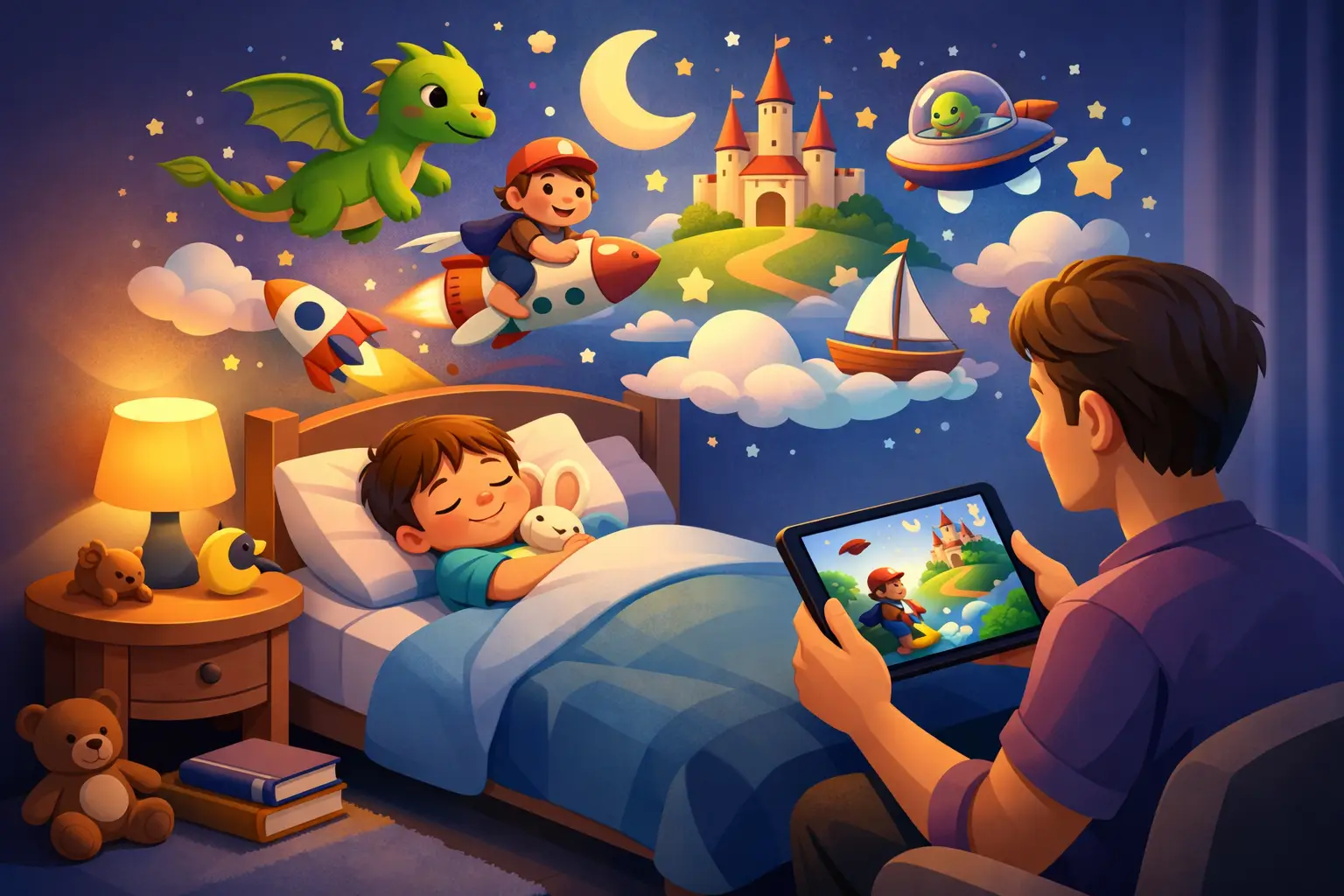
A preschooler who has spent the day being told where to go, when to eat and when to put on their shoes often has one big wish at bedtime: to feel noticed. Personalised stories for preschoolers answer that wish beautifully. When your child hears their own name, recognises their favourite things or sets off on an adventure that feels made for them, bedtime reading becomes more than one last task before lights out. It becomes a small, reassuring moment of belonging.
Why young children love being the hero
Preschoolers are busy working out who they are. They are learning what they can do, what they enjoy and how they fit into the wider world. A story that places them at the heart of the action gives those discoveries a gentle place to grow.
Perhaps they help a shy moon find its glow, guide a lost penguin home or use their kindness to make a grumpy dragon smile. The adventure can be wonderfully imaginary, but the feeling is real: I am capable. I am cared for. I have a place in this story.
This is not about making every tale a lesson. Children need silliness, surprises and a little magic, too. Yet a familiar hero can make the emotional thread of a story easier for a young child to follow. They do not have to work hard to find their way in. They are already there.
Personalised stories for preschoolers can steady bedtime
The best bedtime routines do not need to be elaborate. They need to be recognisable. A familiar order of events - pyjamas, teeth, cuddle, story, sleep - helps a child understand what comes next and begin to settle.
A personalised story can become a treasured part of that rhythm. Unlike a programme that keeps moving and asking for attention, a story invites a child to slow down alongside the adult reading it. Their name arriving on the page brings a spark of delight, while the gentle shape of a beginning, middle and peaceful ending helps the evening feel contained.
That does not mean every night will be quiet. Preschoolers may want to interrupt, repeat a funny bit or announce that their teddy also deserves a starring role. Those little responses are part of the connection. If time is short, choose a shorter adventure. If your child is especially lively, let the story be the bridge between their busy day and a calmer room rather than expecting instant stillness.
What makes a story feel personal
A child’s name is a lovely starting point, but meaningful personalisation goes a little further. It notices the details that make a child feel known without crowding the story with so many facts that the adventure loses its flow.
For preschoolers, the most memorable touches are often simple: a favourite animal companion, a beloved colour, a familiar comfort toy or a place that feels safe. A child who adores diggers may be delighted to help a tiny mole build a moonlit tunnel. A child who loves the sea may want to search for a missing starfish with a friendly seal.
Character matters as much as setting. Stories can gently reflect qualities a child already shows, such as curiosity, thoughtfulness or determination. They can also make room for feelings that are still tricky. A hero who feels nervous before entering a sparkly cave, then finds help and courage, may give a child language for their own worries without turning bedtime into a serious conversation.
Keep the adventure right for their age
Preschool children usually respond best to clear, cosy stories with a simple problem and a satisfying resolution. They enjoy repetition, playful sound words and images they can picture easily. A complicated plot with too many characters can be exciting for an older child, but it may make a three- or four-year-old restless or confused at the end of a long day.
The tone matters, too. A tiny touch of suspense can make an adventure feel special, especially when a trusted grown-up is close by. But bedtime stories are often most helpful when the hero is safe, supported and heading towards a peaceful finish. The goal is not to remove every wobble from the tale. It is to show that wobbles can pass.
You know your child best. Some children adore a cheeky monster who makes muddy footprints across the stars; others would rather meet a sleepy rabbit with a lantern. Choose stories that suit their sensitivities, not what sounds most adventurous on paper.
Make reading a shared ritual, not a performance
There is no need to deliver a personalised story with theatrical voices and perfect timing. Your child is likely to remember your presence far more than your performance. Sit close, read slowly and leave room for their reactions.
Try pausing when their character makes a choice. “What do you think you would do?” can be a lovely question, but it is not compulsory. Some evenings a child will happily invent a whole new scene. On others, they will simply curl into your side and listen. Both are valuable.
If they ask for the same story again, that is often a sign it has become comforting. Repetition lets preschoolers practise understanding, anticipate what comes next and enjoy being the hero once more. You can reread it exactly as it is, or add a small new detail together: perhaps their hero wears stripy socks, carries a biscuit for the journey or brings their soft toy along.
A thoughtful choice for digital storytime
Digital story experiences can be a helpful option for families who want fresh bedtime ideas without searching through endless choices. The experience should still feel calm, simple and led by the adult, rather than designed to keep a child tapping for more.
Look for an easy way to create and manage each child’s character, revisit completed stories and keep a personal library of favourites. It also makes sense to consider how a service treats family information. Parents and carers should be able to understand what is being collected, manage settings and feel confident that children’s privacy is treated with care.
Serene Stories is built around this kind of child-centred ritual, creating magical bedtime adventures in which your child is the hero while giving families a private, organised place to return to their stories.
Let stories support real feelings
A personalised tale cannot solve every bedtime struggle, nor should it be asked to. A child may still be cross about leaving the playground, worried about nursery tomorrow or simply overtired. But stories can offer a softer route into those feelings.
You might choose an adventure about a little hero missing home while on a cloud picnic, learning that a friend can be brave and shy at the same time, or finding a cosy way to say goodnight after a big day. Keep the message light and avoid pressing your child to explain themselves. Often, hearing that their story-self is understood is enough for now.
Over time, these familiar adventures can become shared family language. “Shall we use the hero’s brave breath?” may feel less daunting than a formal talk about anxiety. “Even the dragon needed a rest” can make winding down feel a little less like a rule.
Build a little library of comfort and wonder
Different evenings call for different stories. A gentle, sleepy tale may suit a busy weekday, while a longer treasure hunt can be a treat when there is more time. Keeping a small collection means you can choose by mood without losing the comforting familiarity your child loves.
Include a few dependable favourites alongside new adventures. One child may reach for stories about helping others; another may want journeys through space, gardens or enchanted forests. Let their interests lead, and do not worry if their favourite theme changes from week to week. That changing curiosity is part of preschool life.
The loveliest personalised stories do not ask a child to become someone else. They give them a safe, magical place to be exactly who they are - curious, cuddly, determined, funny and wonderfully worthy of a bedtime adventure all their own.