
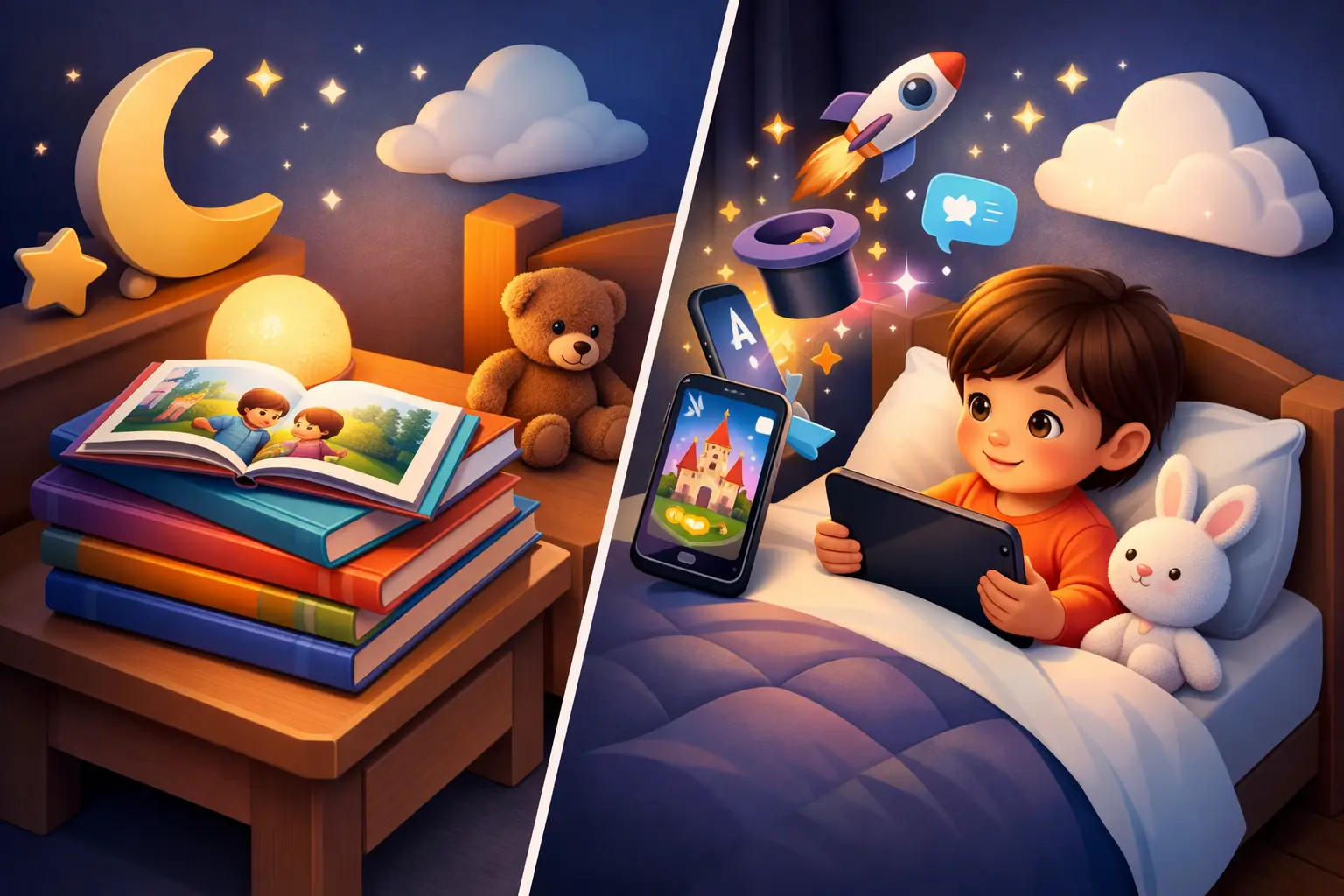
The story has reached the cosy bit. The lights are low, your child is tucked in, and then they hear a familiar name: their own. That small moment can turn a bedtime book from something they listen to into somewhere they belong. When considering personalised books versus story apps, the best choice is rarely about which format is ‘better’. It is about which one helps your family create a calmer, more connected end to the day.
A printed book can feel wonderfully tangible. An app can offer variety and convenience when the day has already asked a great deal of you. And a personalised digital story can bring together the ease of a screen-based library with the delight of making your child the hero. The right answer depends on your child, your routine, and the kind of storytime you want to share.
Personalised Books Versus Story Apps: The Real Difference
Traditional personalised books are often treasured keepsakes. A child may spot their name, appearance or family details woven into a fixed adventure, then return to it for years. There is something special about turning the same pages, noticing a tiny detail for the tenth time, and keeping the book on a shelf beside other favourites.
The trade-off is that a printed personalised book usually tells one story. Once it has arrived, its characters and plot stay the same. That can be exactly right for a child who finds comfort in repetition, but it may not suit a family looking for fresh adventures several nights a week.
Story apps sit at the other end of the spectrum. They can offer an organised library ready when you need it, without waiting for a delivery or finding space on the bookshelf. For busy parents and carers, that accessibility matters. A story can be there after a late shift, on a night away from home, or when your child asks for ‘one more’ and you do not have the energy to invent a plot from scratch.
Yet not all story apps create the same experience. Some are closer to a digital catalogue, where children choose from generic stories. Others include games, rewards or fast-moving features that can make winding down harder. A calm bedtime app should feel less like entertainment to race through and more like a quiet place to read together.
Why Being the Hero Matters
Personalisation is more than adding a name to the cover. When a story treats a child as the hero, it gives them a gentle role in a world made for imagination. They might help a lost moon find its way home, share courage with a shy dragon, or make a new friend in an enchanted garden. The adventure can reflect qualities you already see in them: kindness, curiosity, patience or bravery.
For young children, this recognition can make reading feel especially inviting. A child who is reluctant to settle may be more eager to hear what happens to their character next. A child who has had a wobbly day may enjoy seeing a hero face a small worry with support. The story does not need to deliver a lesson to be meaningful. Simply being seen in a warm, safe narrative can be enough.
A personalised printed book can do this beautifully, particularly when it marks an occasion such as a birthday, a new sibling or a first day of school. But its personal details are set at the point of purchase. A personalised story app can be more flexible, allowing families to create stories around a child character and build a collection over time. That sense of continuity can make bedtime feel like an ongoing shared world rather than a single special gift.
Of course, personalisation only works when the story itself is gentle and well suited to the child. Seeing their name in a noisy, rushed or overly stimulating experience is not the same as being welcomed into a thoughtful tale. The feeling around the story matters as much as the details inside it.
Screens at Bedtime Need Thoughtful Boundaries
For many parents, the biggest question is not about stories at all. It is about screens. That concern is reasonable. A bright device, alerts from other apps, or the temptation to keep tapping can pull bedtime in the wrong direction.
Using a story app does not have to mean handing over a device and stepping away. In fact, the most comforting use is often shared reading. You can hold the mobile phone or tablet yourself, reduce the brightness, switch off notifications, and let the story be the focus. Treat it as you would a book: a few quiet minutes together, followed by a cuddle and goodnight.
Consistency helps, too. If stories happen after pyjamas and teeth brushing, in the same cosy corner or beneath the same blanket, the ritual becomes familiar regardless of format. Children respond to those predictable signals. The device is then simply where the story lives, rather than the main event.
If your child becomes more alert after looking at a screen, a print book may be the better bedtime choice. You could save app-based stories for earlier in the evening or for travel. There is no rule that says a family must choose one format forever. Many households enjoy both, using each where it fits best.
Choose for the Moment, Not the Trend
A physical personalised book may be the loveliest option when you want a lasting object to unwrap, revisit and display. It can become part of a child’s memory of a particular stage of life. It also offers a fully screen-free reading experience, which some families strongly prefer at night.
A personalised story app may suit you when flexibility is the priority. It can make it easier to create new adventures, keep stories together in one personal library, and read wherever bedtime happens. It can also be helpful for grandparents or other carers who want to share in a child’s familiar story world without borrowing a favourite book from home.
Think about what tends to make bedtime difficult in your house. If the challenge is finding an engaging story after a long day, variety and quick access may help. If the challenge is helping your child feel settled and noticed, a story featuring their character can add a lovely sense of belonging. If the challenge is reducing stimulation, choose the format and setting that feels quietest for them.
There is also room for a child’s preference. Some will love holding a book and turning pages themselves. Others will light up at seeing a new story made around their character. Listening to that response is more useful than following a blanket rule about paper or apps.
Make Digital Storytime Feel Personal and Calm
The warmth of storytime comes from your presence, not from the format alone. Pause when your child notices something funny. Ask what they think their hero might do next. Let them choose between two stories when they can. These small moments turn reading into connection rather than another item on the evening checklist.
It also helps to keep the experience simple. Choose the story before you begin, avoid jumping between apps, and keep notifications away from the bedtime space. If stories are shared with family, make sure you are comfortable with who can view them and how your child’s information is handled. A child-centred service should give parents clear control over profiles, settings and sharing.
Serene Stories is designed around this quieter kind of digital ritual: magical, personalised bedtime stories that make your child the hero, with a personal collection families can return to night after night.
Whether you reach for a beloved hardback or open a new adventure on a screen, the most lasting part of bedtime is likely to be much simpler: your child hearing your voice, feeling safe beside you, and drifting off with the comforting thought that there is a little more magic waiting tomorrow night.