
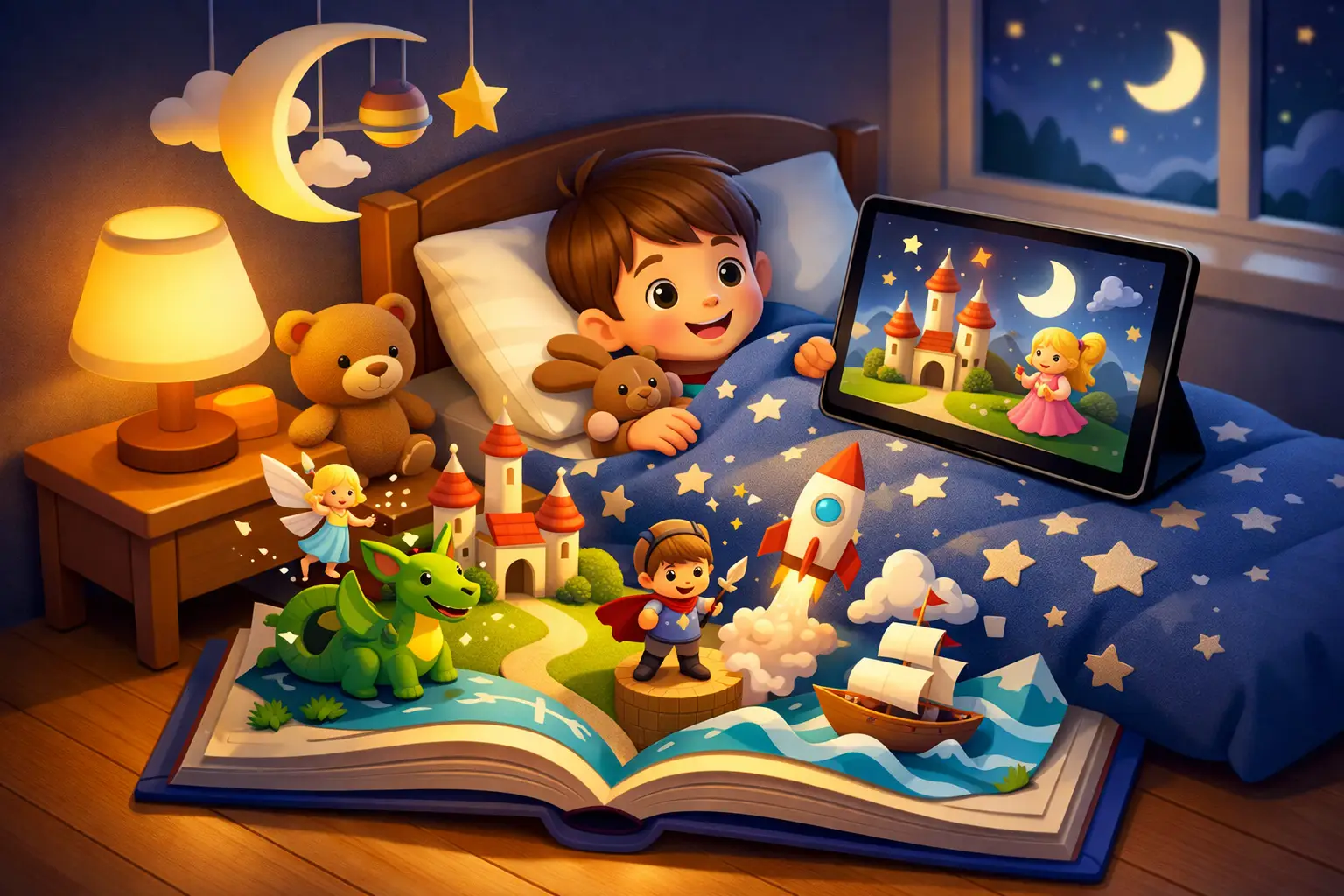
A child who has spent the day being told where to go, what to wear and when to tidy up may need one thing most at bedtime: a moment that feels entirely their own. Personalised bedtime stories for kids offer that moment. When their name, ideas and character shape the adventure, storytime can become more than a way to fill the final ten minutes of the day. It becomes a small, reassuring signal that they are known.
That feeling matters especially when evenings are busy. Between supper, bath time, lost pyjamas and one more drink of water, it is easy for reading to become another task to get through. A familiar, child-centred story gives the routine a gentler centre. It invites connection without demanding a big performance from tired parents or caregivers.
Why personalised bedtime stories for kids feel different
Children are naturally drawn to stories because stories make room for possibility. A child can visit a moonlit forest, help a shy dragon find its courage or sail a paper boat across a starlit sea, all from the safety of their bed. When the hero shares their name and reflects something they love, the distance between listener and story becomes smaller.
This is not simply about novelty. Being the hero can help a child practise seeing themselves as kind, capable and brave. Perhaps they solve a problem by listening carefully, welcome a new creature into the group, or keep going when a path feels unfamiliar. These are gentle emotional rehearsals, presented in a form young children can enjoy rather than a lesson they are expected to learn.
For some children, personalisation also creates an easier way into reading. A child who loses interest in a generic tale may listen closely when the main character has their name, favourite animal or a recognisable spark of their personality. They are not being asked to enter a stranger’s adventure. They have been invited into their own.
There is a balance to keep, though. The most comforting bedtime stories do not need constant excitement, endless choices or high-stakes peril. A personalised story works best at night when the child is the hero of a calm, age-appropriate adventure with a soft landing. Wonder is welcome; overstimulation is not.
A nightly ritual built around connection
The value of bedtime reading is often found in its repetition. The same chair, the same blanket, the same voice saying, ‘Shall we read?’ can help a child recognise that the day is winding down. Personalised stories add another layer: the ritual speaks directly to them.
Try treating the story as a shared pause rather than a performance. Let your child choose the setting - perhaps a garden, a castle in the clouds or a quiet underwater world - then settle in and read slowly. You do not need character voices or theatrical flair. A calm voice, a little closeness and a few unhurried minutes are enough.
After the story, a simple question can extend the warmth without waking their mind up again. You might ask which part made them smile, or whether their hero was helpful, curious or brave. Keep it light. Bedtime is not the moment for a detailed discussion of every plot point, especially if your child is already drifting towards sleep.
Personalised stories can be particularly helpful during change. Starting nursery, moving house, welcoming a sibling or adjusting to a new bedtime routine can all make a child feel less certain of their world. A story in which they are cared for, capable and safely guided may offer a reassuring emotional echo. It cannot solve every worry, but it can create a dependable place to return to each evening.
What makes a story calming rather than distracting?
Not every story suits the hour before sleep. A brilliant adventure at three in the afternoon can be too noisy for eight o’clock. For bedtime, look for a pace that gradually softens, language that feels warm, and an ending that returns the hero to safety, home or rest.
It also helps when the story has a clear emotional shape. The hero notices something, faces a manageable challenge, receives help or finds an answer, then settles down. This gives children a satisfying sense of completion. Leaving a dramatic cliffhanger for tomorrow may work for older readers, but it can be less useful for a child who is meant to be closing their eyes.
Personal details should feel thoughtful, not overwhelming. A few meaningful touches - a child’s name, an animal they adore, a much-loved hobby or a gentle personality trait - can make a story feel magical. Adding too many details can make the tale feel cluttered, or make a child feel as though they need to direct every part of it.
The best approach depends on the child. Some will delight in being a fearless explorer. Others may prefer to be a thoughtful helper who brings lanterns to lost fireflies. Follow their temperament rather than pushing them towards a version of bravery that does not feel like them.
Let children have a voice, but keep bedtime simple
Giving children a small say in their story can build anticipation. They might choose between a woodland, a seaside cave or a garden after rain. Yet a long menu of decisions can turn a soothing routine into negotiations.
A useful rhythm is to offer one or two choices before the story begins, then let the adventure carry them along. If they ask for the same setting night after night, that is fine too. Familiarity is often part of the comfort.
Creating a story library your family can return to
A digital story collection has a quiet advantage over the scramble to find a new book each evening: it keeps treasured adventures together. One night your child may want a brand-new quest. On another, they may ask for the story where they helped a sleepy comet find its way home for the fifth time.
Saving stories also lets a family build a small record of a child’s changing interests. The child who once wanted every story to feature diggers may later choose sea creatures, dance recitals or secret gardens. Those stories can become lovely reminders of the worlds that mattered to them at different ages.
Serene Stories is designed around this kind of family ritual: parents and caregivers can create a child character, make stories centred on them and keep completed adventures in a personal library. That organisation matters. A story should be easy to find when everyone is tired, rather than buried in a busy feed or lost among unrelated entertainment.
Sharing can have a place too. A grandparent who lives far away may enjoy reading a child’s latest adventure during a video call, or a caregiver may appreciate having a familiar story ready for a sleepover. The story remains personal, while the circle of people who can enjoy it grows a little wider.
Privacy is part of the bedtime promise
When a service is built around a child’s identity, care for their information should never be an afterthought. Parents and caregivers deserve clear control over child profiles, account settings and the stories connected to their family.
Before creating personalised stories, take a moment to understand what details are needed and why. Share only what helps make the story meaningful. A first name, a favourite creature or an imagined superpower can often create plenty of magic without adding unnecessary personal information.
It is also wise to consider how stories are saved and shared. A private library can make the experience feel more like a family bookshelf than public content. If you choose to share an adventure, do so deliberately and with the same care you would use for a family photo or message.
Making the ritual last
Consistency matters more than length. Some nights you may have twenty peaceful minutes; on others, five minutes before sleep is the only realistic option. A short personalised story still counts. The point is not to create a perfect, picture-postcard bedtime. It is to make a small pocket of attention that your child can rely on.
If bedtime has been difficult lately, begin gently. Choose a regular time, dim the room, put distracting devices aside and let the story be the final shared activity. Repetition will do much of the work. Over time, the opening words of a familiar ritual can become a cue that the day is safely ending.
Years from now, children may not remember every dragon, moonbeam or secret map. They may remember the feeling instead: being tucked in, listened to and cast as the hero by someone who loved them. That is a lovely place for any day to end.