
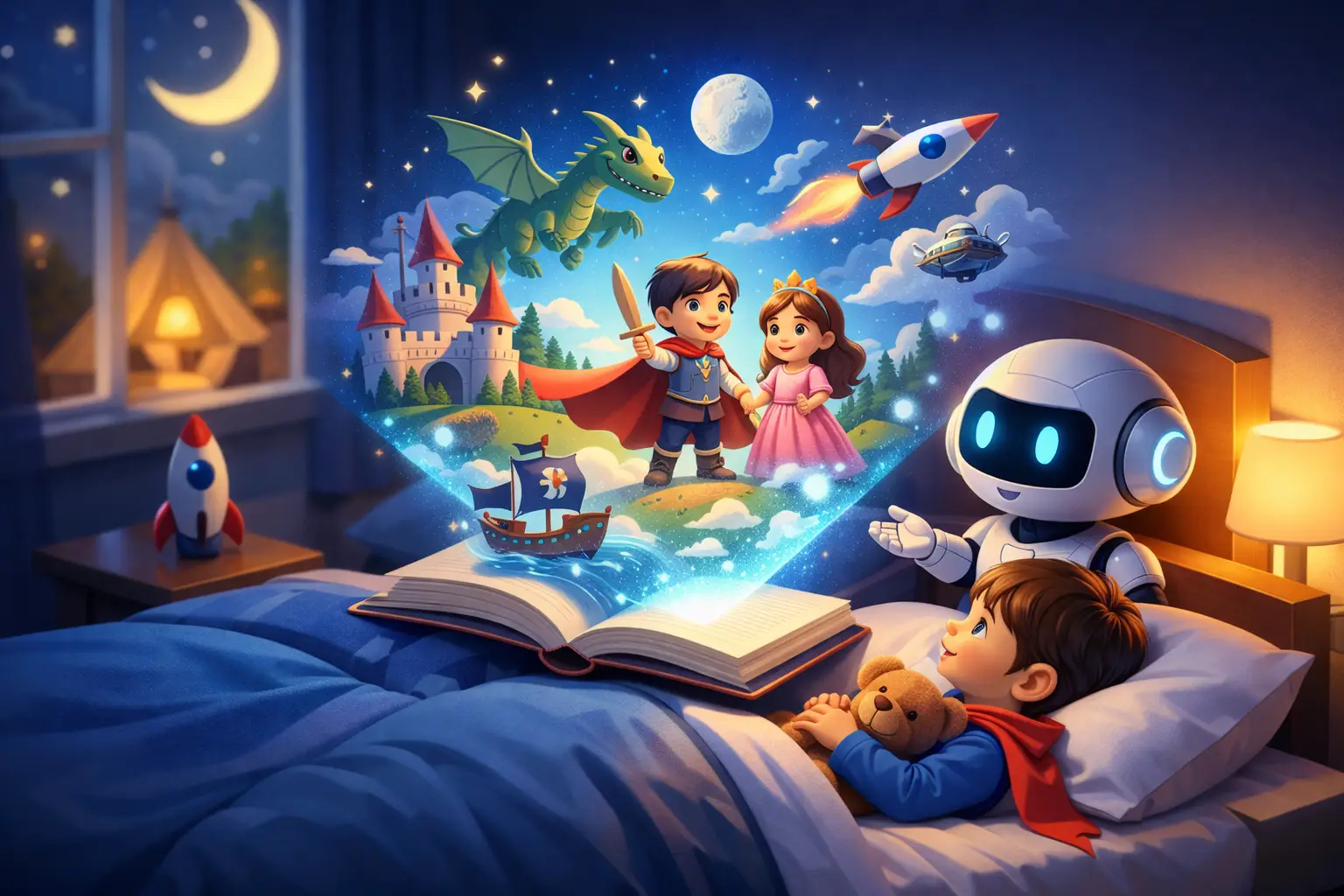
A pirate who shares her treasure. A shy dragon who learns to ask for help. A child who recognises their own name on the very first page and suddenly leans a little closer. Personalised AI bedtime stories can turn an ordinary part of the evening into a small, magical moment of recognition.
For parents and carers, that matters because bedtime is rarely just about getting through one more book. It is a chance to slow the pace, reconnect after a busy day and help a child settle with the reassuring sound of a familiar voice. When the hero feels like them, the story can hold their attention while gently making room for comfort, courage and imagination.
Why personalised AI bedtime stories feel different
Children have always enjoyed hearing their name in a story. It tells them, quite simply, that they belong. A personalised story takes that feeling further by building a gentle adventure around details that matter to them: a favourite animal, a beloved colour, an imaginary destination or the kind of brave choice they would like to make.
The best personalised AI bedtime stories do not need to make a child the centre of every universe in a loud or overstimulating way. At bedtime, the magic is often quieter. Perhaps they help a lost moonbeam find its way home, make friends with a nervous cloud or guide a tiny owl through a moonlit garden. The child is the hero because their kindness, curiosity and courage move the story forward.
That can be especially helpful for young children who are still learning how to name big feelings. A story about a hero feeling worried before a new adventure can open a gentle conversation without putting a child on the spot. A tale about missing someone, sharing a toy or trying again after a mistake can offer reassuring language they may use later.
Personalisation also solves a familiar bedtime problem: the book your child adored last week may suddenly be the one they refuse to hear. A new adventure with their own character at its heart can bring back that sense of anticipation, while keeping the calm rhythm that makes bedtime feel secure.
Keep the story personal, but the routine predictable
A personalised tale works best when it sits inside a familiar bedtime pattern. Children often settle more easily when they know what comes next, even if the adventure itself changes each evening. The story can be fresh; the ritual around it can stay wonderfully steady.
You might begin after pyjamas and toothbrushing, choose a quiet place together and let your child make one small decision about the story. They could pick whether tonight's adventure happens in a forest, under the sea or among the stars. Then read at an unhurried pace, with the same cosy closing phrase each night.
This balance is useful because too much choice can become exciting rather than calming. If your child wants to add ten characters, three plot twists and a talking volcano when they should be winding down, save some ideas for tomorrow. A simple prompt often creates the gentlest result: their character, one friendly companion, one place and one feeling to explore.
The length matters too. On a peaceful evening, a longer story may be lovely. On a night when everyone is tired, a short adventure with a soft ending is usually the kinder choice. Personalised storytelling should reduce pressure, not add another task to complete perfectly.
Let your child shape the hero
A child character does not have to match every detail of your child’s real life. Some children will want a hero who wears their favourite jumper and has their exact name. Others would rather become an astronaut, a mermaid or a tiny fox with a lantern. Both approaches can feel personal.
Try asking open, low-pressure questions: “What would your hero like to help with tonight?” or “Who could be their friend on the journey?” These prompts give children a sense of agency while leaving plenty of room for surprise. If they are too sleepy to answer, choose for them. Being cared for is part of the bedtime ritual too.
It is worth keeping the emotional tone in mind. A child who has had a difficult day may prefer a story where the hero is safe, supported and able to rest. A child who is excited about something new might enjoy a gentle quest. The goal is not to teach a lesson in every story. Sometimes a magical stroll home beneath the stars is enough.
What to look for in a family-friendly story service
AI can make creating stories quick and flexible, but the technology should remain in the background. Parents should feel that the experience is simple, thoughtful and made for family life, rather than a complicated tool that demands lots of instructions.
Look for a service that lets you create and manage a child character clearly, then saves completed stories in an organised library. Returning to a favourite adventure can be as comforting as discovering a new one, and a personal collection gives your family a record of the worlds you have imagined together.
Privacy deserves the same care as the story itself. Before creating a profile, take a moment to understand what information is requested, how it is used and what controls are available. Choose only the details needed to make the story meaningful. A trustworthy children’s service should make its privacy information and settings easy for adults to find and understand.
Sharing options should be considered, too. Grandparents or another caregiver may love receiving a story created for a child, particularly when they live far away. But sharing should be a choice you control, with clear boundaries around who can access the story. The most comforting digital experiences are the ones that respect a family’s private space.
Serene Stories is designed around that family-first idea: creating a child character, making magical stories where they are the hero, and keeping those adventures together in a personal story library.
A few thoughtful boundaries for AI stories
Personalised AI stories are a lovely addition to family reading, not a replacement for every kind of book. Picture books, borrowed library favourites, stories you invent aloud and the slightly silly tale your child asks for again and again all have their place. Variety keeps reading playful and gives children many kinds of language, art and imagination to enjoy.
It also helps to read a newly created story before sharing it with a very young child, especially if you have used an unusual prompt. AI-generated content can occasionally take an unexpected turn, and parents know best what feels right for their child’s age, sensitivities and bedtime mood. Choose gentle themes, familiar challenges and endings that lead towards safety and sleep.
Screens are another consideration. For some families, reading from a mobile phone or tablet works well, particularly when the device is dimmed and distractions are put away. For others, a screen near bedtime makes settling harder. If that is true for your child, create or choose the story earlier, then read it in a low-stimulation setting. What works depends on your household, and it may change as your child grows.
The story should never become a bargaining tool: “You only get your adventure if you behave.” Bedtime stories are most powerful when they feel like connection, not a reward to be earned. Even on a difficult evening, a short, familiar tale can be a way of saying, “We are here. The day is over. You are safe.”
Make room for the stories they will remember
The details children remember are often not the grandest ones. It may be the night their hero gave a biscuit to a lonely giant, the recurring rabbit sidekick, or the way you used a whispery voice for the moon. Personalised stories create a space for those little family traditions to grow.
You do not need a perfect routine or an elaborate adventure every night. Start with one calm story, one child at the centre of it and a few undistracted minutes together. Over time, those imagined journeys can become a gentle way to end the day - with your child feeling seen, celebrated and ready to dream.