
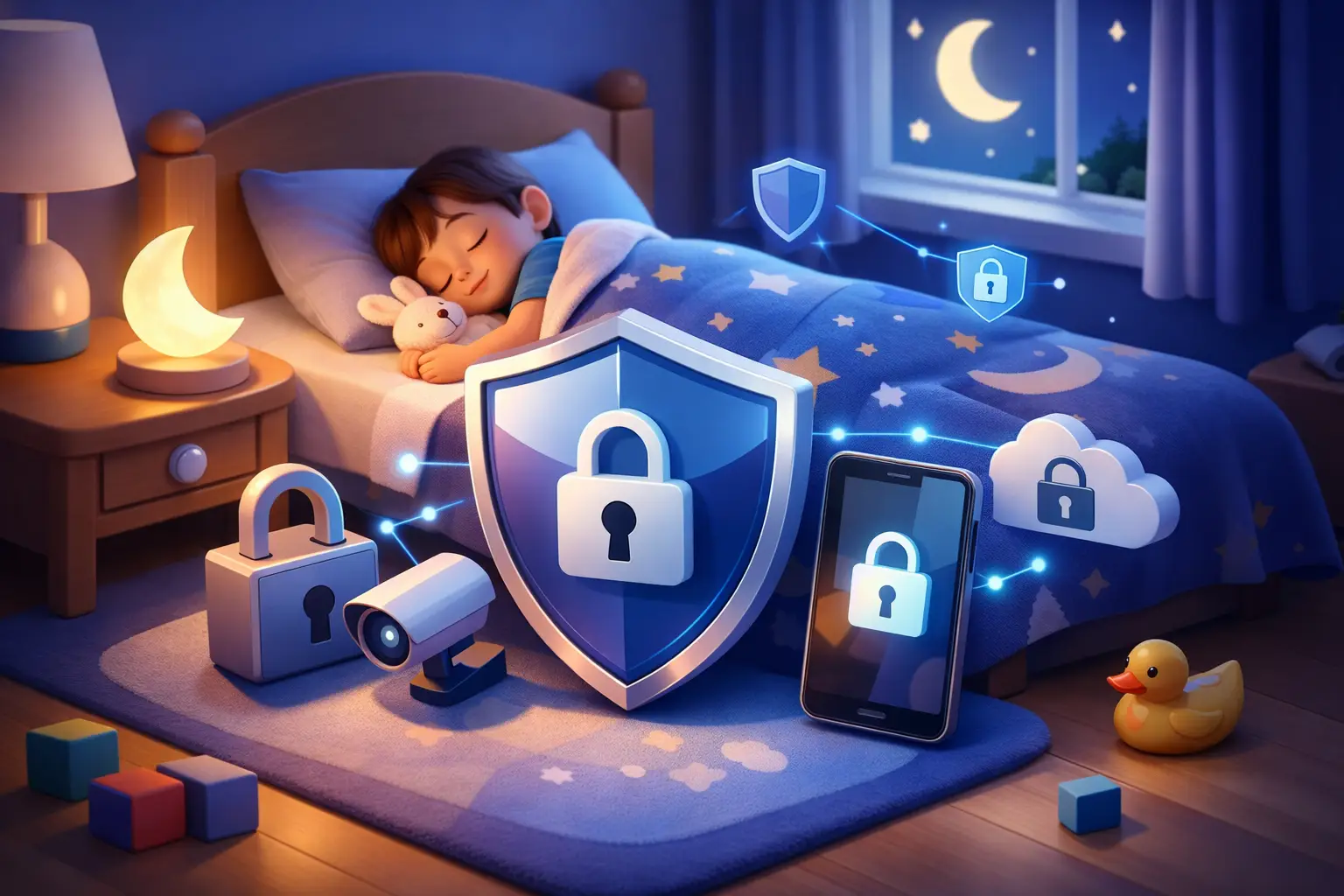
A personalised story can make a child feel wonderfully seen: their name on the page, their favourite animal beside them, and a brave little adventure waiting before sleep. That magic should never require families to give away more than they are comfortable sharing. Learning how to protect children's data helps you keep storytime warm, private and firmly in your hands.
For parents and carers, this is not about becoming a privacy expert or making every app feel frightening. It is about asking a few calm, practical questions before creating an account, adding a child profile or sharing a story with family. Small choices can make a meaningful difference.
What counts as a child's data?
A child's data is more than a full name and date of birth. It can include a nickname, photo, voice recording, location, device details, school, interests and the stories they create or enjoy. In a personalised storytelling app, details such as a child's first name, appearance, favourite things or family members may help shape the story. Those details can feel harmless on their own, yet together they can build a recognisable picture of a child.
It is helpful to separate information into two groups. The first is information that makes an experience feel personal, such as a first name or favourite colour. The second is information that identifies, locates or exposes a child, such as an address, full birth date, school name, live location, contact details or an easily recognisable photograph. A thoughtful service should only request what it truly needs for its purpose.
Personalisation is not automatically a problem. The question is whether the information collected is proportionate, clearly explained and protected with care.
How to protect children's data before using an app
Start with the adult account. A child should not need to create their own account, use an email address or manage privacy choices that are written for grown-ups. Where possible, make the account yourself and keep control of its settings, password and payment information.
Before entering details, take a moment to read the privacy notice and children's privacy information. You do not need to study every line of legal language. Look for clear answers to a few everyday questions: what information is collected, why it is collected, who can access it, how long it is kept, and how you can delete it. If those answers are difficult to find or unnecessarily vague, it is reasonable to pause.
Choose the smallest amount of information that still creates a lovely experience. A story can often be magical with a first name, a broad age range and a few gentle interests. It rarely needs a surname, exact birthday, home address, school, telephone number or precise location. If a field is optional, consider leaving it blank unless you can see a clear reason to include it.
This is especially useful when adding details that children may repeat in real life. A character can live in a fictional forest, explore a moonlit harbour or visit a make-believe village. There is no need for a bedtime hero to reveal where they live.
Look for privacy choices that work for families
Good privacy controls should be easy to find and easy to understand. They should not be hidden behind confusing menus or require a long email exchange to use. As you explore an app, check whether you can review or edit a child's profile, download or delete information, and manage who can view shared content.
Pay attention to default settings. The safest setting is usually private, meaning stories and profiles are visible only to the account holder unless you actively choose to share them. A public-by-default design asks families to do too much work to restore privacy. Private-by-default gives parents room to decide.
It is also worth checking whether the service uses children's information for advertising, behavioural profiling or unrelated marketing. A family storytelling service should be clear about these practices. Children deserve spaces where their quiet interests and bedtime routines are not turned into signals for advertisers.
Rules differ by country, but responsible services should take children's privacy seriously wherever a family is based. In the UK, data protection law gives people rights around access, correction and deletion. Plain-language policies, age-appropriate safeguards and a straightforward way to contact the service are reassuring signs that a company respects those responsibilities.
Keep sharing within a trusted circle
Sharing a finished story with a grandparent or another carer can be one of the sweetest parts of a personalised library. It lets a child feel celebrated by the people who love them. Still, sharing deserves the same care as creating the story.
Use direct, private sharing options where available, and send stories only to people you know and trust. Avoid posting a story publicly if it includes a child's name, image, voice, family details or clues about where they live. Even a charming screenshot can travel beyond its intended audience once it appears on a public social account.
If you do share more widely, make a version with identifying details removed. Consider using a character nickname rather than a full name, avoiding photos, and leaving out references to schools, clubs, streets or regular routines. Ask older children how they feel about their story being shared too. Their answer matters, and this small conversation teaches an early lesson about consent.
Build safer habits around family devices
Privacy is not only decided when you sign up. It is also shaped by the devices used at the end of a busy day. A tablet left unlocked on the sofa can expose a child profile just as easily as an unclear privacy setting.
A few household habits offer a great deal of protection:
- Use a unique, long password for the adult account and turn on two-step verification when it is offered.
- Keep mobile phones and tablets updated, as updates often fix security weaknesses.
- Use a device passcode and avoid saving passwords on a shared device that visitors or children can open freely.
- Review app permissions, especially camera, microphone, contacts and location access, and switch off anything the app does not need.
These steps need not interrupt bedtime. Set them up once, then let the evening stay focused on the story. It can also help to keep a shared family device in a common area rather than in a child's bedroom, particularly for younger children.
Review profiles as your child grows
Children change quickly. The details that suited a preschooler may not feel right a year later, and an older child may have clearer views about their name, likeness and favourite interests appearing in a story. Make profile reviews part of an occasional family digital tidy-up, perhaps at the start of a new school term or when you are clearing out old photos.
Remove information that is no longer needed, update preferences and delete stories or profiles you no longer want stored. If you stop using a service, check what happens to the account and its associated data. Deleting an app from a device is not always the same as deleting the account or stored information.
This is also a good time to revisit shared stories. A link sent to a relative months ago may still work, depending on the service. If you can revoke it, do so when it is no longer needed.
Choose trust, not just novelty
A dazzling feature is not necessarily a family-friendly one. When comparing story apps, games or learning tools, look beyond the bright illustrations and promises of personalisation. Does the service explain its choices clearly? Does it give parents genuine control? Can you create a meaningful experience without surrendering sensitive details?
At Serene Stories, the goal of personalisation is to help a child become the hero of a calming nightly ritual, not to ask families for a life story. That distinction is worth seeking wherever your family spends time online.
The most protective approach is also a gentle one: share only what is needed, keep the audience small, revisit settings from time to time, and let your child know that their information belongs to them. With those quiet safeguards in place, there is more room for the best part of bedtime - a familiar voice, a little wonder, and a child drifting off feeling safely at the centre of their own story.