
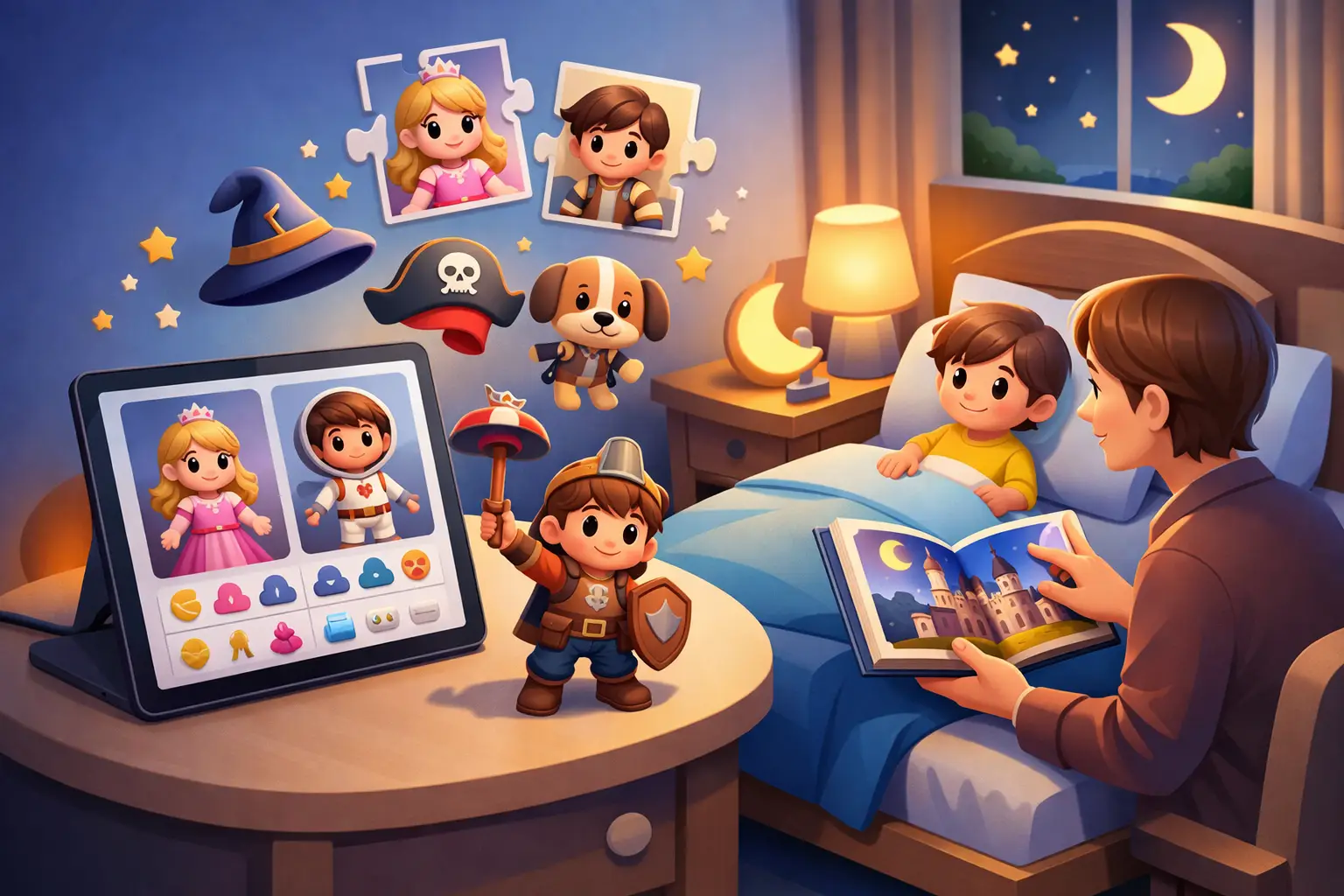
A child who hears their own name in a story often sits a little closer. They may spot the same bedtime teddy on the page, recognise their brave-but-careful nature, or laugh when their character chooses strawberry ice cream after saving the day. Learning how to personalise story characters is not about adding every detail of a child’s life. It is about choosing a few meaningful touches that help them feel seen, safe and wonderfully central to the adventure.
For parents and carers, that small shift can make bedtime reading feel less like one more item on the evening checklist and more like a calm ritual you both look forward to. A personalised character gives a familiar story shape to a child’s own imagination - and leaves plenty of room for magic.
Begin with the details your child would recognise
Start with the basics: their first name, approximate age and a simple physical description if it feels right for your family. Hair colour, a favourite pair of pyjamas or their beloved red wellies can make a character feel instantly familiar. Keep these details light. The goal is recognition, not a perfect portrait.
Then add one or two traits that reflect who they are becoming. Perhaps your child is thoughtful, curious, gentle with animals, determined, silly or proud of learning to do things independently. Traits work especially well when they guide the story rather than label the child. Instead of repeatedly saying that a character is brave, show them taking a deep breath before helping a lost moonbeam find its way home.
This matters because children are not only listening for what happens next. They are listening for what the story says about them. A character who notices others, keeps trying, or asks for help when a problem feels big can offer gentle reassurance without turning bedtime into a lesson.
Choose a small number of favourite things
The most memorable personalised stories often include ordinary details alongside extraordinary events. A child may travel through a cloud forest with their favourite stuffed rabbit, carry a tiny torch like the one they use at home, or meet a friendly dragon who loves the same fruit as they do.
Choose details that bring comfort or spark a smile: a favourite animal, colour, snack, hobby, song, toy or place. Two or three are usually enough for one story. If every sentence includes another fact, the tale can start to feel like a profile rather than an adventure.
It also helps to vary these details from story to story. One evening, their character might be a pirate looking for a sleepy lighthouse. Another, they could be a gardener helping glow-worms prepare for a moonlit party. The child remains recognisable, but the world around them stays fresh.
Let comfort objects have a gentle role
A comfort object can be a lovely companion, particularly for younger children. Their teddy might know the way through misty woods, while a favourite blanket becomes a magical cape for a very small hero. Give the object a supporting role rather than making it solve every problem. Your child’s character should still have choices to make and a meaningful part to play.
Personalise the character’s feelings, not just their appearance
The most powerful stories reflect a child’s emotional world with care. If they are adjusting to nursery, worried about the dark, welcoming a new sibling or finding a friendship tricky, a story can create a safe little distance from those feelings.
For example, a character might feel unsure before joining a gathering of fireflies, then discover that asking a kind question is enough to make a new friend. A child who resists bedtime may enjoy a tale about a young star who learns that resting helps their light shine brightly tomorrow.
Keep the emotional thread soft and hopeful. Bedtime stories are rarely the right place to replay a difficult day in detail or press for a particular outcome. Let the character experience a manageable wobble, find support, make a choice and arrive somewhere peaceful. This gives children a reassuring rhythm: feelings can be real, and they can pass.
It depends on your child, of course. Some children love stories that gently mirror their experiences. Others prefer pure make-believe after a busy day. Follow their lead. If they keep asking for the story about the shy fox, that may be their way of exploring a feeling. If they only want space rockets and giggling dinosaurs, that is valuable too.
Give your child’s hero meaningful choices
Personalisation becomes more than decoration when the character has agency. Rather than simply being carried through a magical world, let them decide whether to cross the pebble bridge or follow the singing river. Let them choose a kind response, try an idea, or invite someone to join the adventure.
The choices do not need to be complicated. Young children often enjoy clear, gentle options with a positive outcome. A character could share a lantern, listen carefully for a clue, or use their love of drawing to map a hidden garden. These moments show that their ideas matter.
Be mindful of the balance. A story where the hero must solve everything alone can feel demanding, especially for a tired child. It is just as encouraging for a character to accept help from a wise owl, a grandparent-like bear or a loyal friend. Independence and connection can belong in the same story.
Create a supporting cast that feels safe
Family members, friends and pets can make a personalised story feel warm, but they do not all need to appear at once. Adding one familiar companion is often plenty. A sibling might be a fellow explorer, a pet could be the cheerful keeper of secret keys, or a caregiver might send the hero off with a cosy scarf and a reminder that home will be waiting.
When including real people, keep their roles kind and uncomplicated. Avoid turning stories into a record of family disagreements, school troubles or embarrassing moments. A magical tale should protect a child’s dignity, especially if it may be read again or shared with relatives.
Made-up side characters are useful too. They give your child someone to help, learn from and laugh with, without placing too much focus on real-life relationships. A snail who tells very slow jokes or a cloud who is afraid of heights can bring gentle humour and heart.
How to personalise story characters with privacy in mind
A personalised bedtime story can feel wonderfully intimate, which is why it is wise to be selective about the information you use. A first name, interests and broad personality traits are usually more than enough to create a magical experience. There is no need to include a home address, school name, daily schedule, full date of birth or other identifying details.
Think about who may read or receive the story, too. If you plan to share it with family, choose details you would be happy for them to see. If a child is old enough to have an opinion, invite them into the process: would they like their character to have curly hair, a purple backpack or a pet fox? Giving them that choice can be part of the fun.
At Serene Stories, the aim is to make each child the hero while keeping the experience family-centred and thoughtful. The best character details are often the simplest ones - the things that make your child smile because they feel lovingly noticed.
Let the character grow alongside your child
A good story character does not have to stay exactly the same. Children change quickly: a new favourite animal appears, swimming lessons begin, a fear fades, or they become fascinated by planets. Refreshing their character from time to time keeps stories feeling true to who they are now.
You can also preserve certain details as comforting anchors. Their familiar companion, a beloved colour or a special phrase can return across different adventures, creating a little story world that belongs to them. This is especially lovely in a saved story library, where children can revisit earlier adventures and remember the version of themselves who first met the moonlit fox or sailed the biscuit sea.
There is no need to make every story deeply personal. Some nights call for a character who resembles your child closely; others call for a simple, silly adventure with no emotional theme at all. The magic lies in having the choice.
When you personalise with a light touch, your child’s character becomes more than a name placed into a template. They become a brave, curious, tender-hearted hero with room to surprise themselves - and a cosy place to return to at the end of the day.