
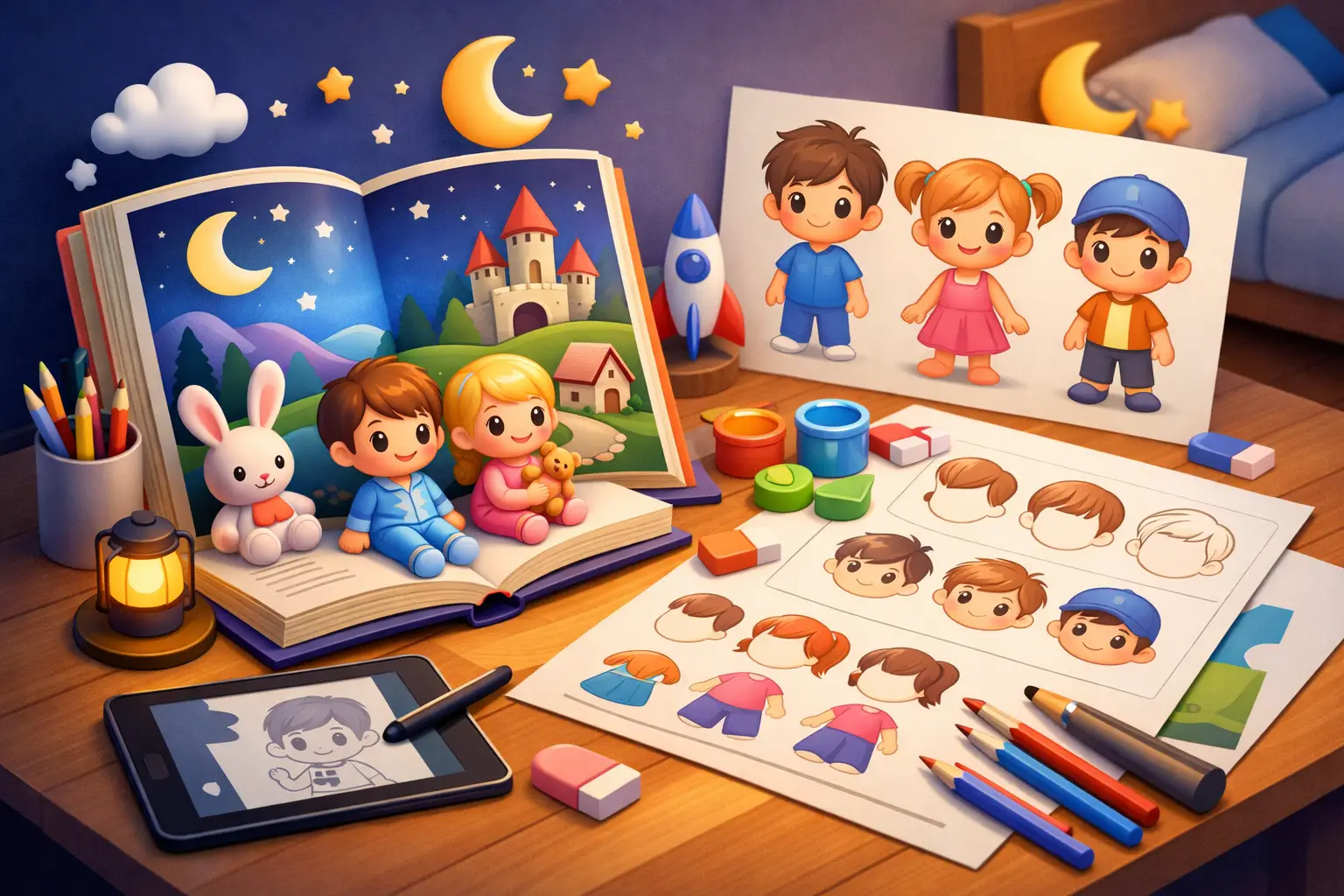
A child notices the little things. The stripe on their favourite pyjamas, the name of the teddy tucked beneath their arm, the fact that they are brave around dragons but less sure about the dark hallway. When you know how to create child characters with those meaningful details, a bedtime story can feel less like something read to them and more like a magical place made especially for them.
The aim is not to recreate your child perfectly on the page. It is to create a warm, recognisable story hero who helps them feel seen, capable and safe. A few carefully chosen details can do far more than a long list of facts, especially when the story is meant to settle a busy day and lead gently towards sleep.
Start with the child at the heart of the story
Begin with the qualities your child would be happiest to recognise. Their name is often the natural starting point, but it is only one part of their character. Think about how they move through the world: perhaps they are curious, kind, determined, giggly, thoughtful or wonderfully good at spotting tiny details.
Choose one or two traits rather than trying to capture everything at once. A child who is described as a careful explorer may enjoy a story about finding a lost moonbeam. A child who loves helping might become the hero who guides sleepy fireflies home. These traits give the adventure direction while keeping the child’s role positive and believable.
Try not to use a character profile as a report card. Bedtime is not the moment to turn a story into a lesson about being tidier, quieter or braver. If your child is working through a tricky stage, let their character show gentle courage in small ways: asking for help, taking a breath, or trying again with a friend nearby.
Pick details that spark recognition
The most memorable details are usually simple. A favourite animal, a beloved soft toy, a preferred colour, or a hobby can make a story immediately feel personal. If your child adores yellow wellies, they might wear them on a puddle-jumping quest. If they carry a bunny everywhere, the bunny can become a wise travelling companion.
Use only details you are comfortable placing in a story. There is no need to include a full name, school, address, daily routine or other private information for a child to feel like the hero. A first name or nickname, broad interests and imaginary touches are more than enough for a rich story world.
How to create child characters with gentle choices
A child character works best when they have a clear role, an age-appropriate challenge and the freedom to make a difference. The challenge does not need to be frightening. A missing star, a shy cloud, a garden that has forgotten how to sing, or a tiny boat looking for its way home can all create a lovely sense of purpose.
Give your child a strength that helps solve the problem. It might be their kindness, imagination, patience, sense of fun or ability to notice what others miss. This matters because children often return to stories that let them practise seeing themselves as capable. They do not have to defeat a villain to be heroic. Sometimes a hero listens closely, shares a torch or offers a comforting idea.
Keep the emotional shape reassuring. A little suspense can make a story exciting, but the child should never be left alone with a worry for long. Include friendly helpers, familiar comforts and a calm resolution. For younger children, it is often best if the journey ends somewhere cosy: back in bed, beneath a moonlit tree, or at a lantern-lit picnic with new friends.
It also helps to separate the story character from real-life pressure. Your child can be adventurous in a story even if they are cautious at nursery. They can fly with owls, speak to whales or lead a parade of sleepy hedgehogs without being asked to act that way tomorrow. Imagination gives children room to explore feelings safely.
Build a character they will want to meet again
Children love repetition when it feels like returning to a favourite place. Once you have found a character shape that delights them, keep a few elements consistent across stories. Their companion might always be a brave little fox. Their special skill might be hearing the quietest wishes in the woods. Their favourite blanket might become a cape whenever an adventure begins.
Consistency does not mean every tale must be the same. It simply gives the child a familiar anchor while the setting changes. One evening they can visit a cloud bakery; another, they can help a lighthouse find its glow. The recognisable details tell them, before the story has even begun, that this is their world.
Let your child’s interests lead the way, but leave room for surprises. A dinosaur-loving child may expect a dinosaur adventure, yet might be delighted to discover a dinosaur who is learning to bake moon-cakes. The best personalised stories balance what a child already loves with one gentle new idea to wonder about.
Make room for siblings, friends and family
When more than one child shares storytime, each character deserves a meaningful part. Avoid making one child the permanent leader while everyone else simply follows. One might bring a bright idea, another might spot the path, and another might know how to make a nervous creature laugh.
For siblings, it can be helpful to give each child a distinct strength without turning those strengths into labels. Rather than saying one is always ‘the clever one’ and another is always ‘the brave one’, let their contributions change from story to story. This gives every child space to grow and prevents comparisons from becoming part of the ritual.
Family members can appear too, especially when a child finds comfort in familiar faces. Keep their roles light and loving: a grandparent might send a map, a caregiver might leave a sandwich for a long journey, or a baby sibling might be the keeper of a surprisingly useful rattle. The child should still remain at the centre of the adventure.
Choose appearance details with care
Appearance can help a child picture themselves in a story, particularly when it reflects features they value. Hair, skin tone, glasses, a hearing aid, a wheelchair, freckles, cultural clothing or a cherished hairstyle may all be meaningful details to include. The important thing is that these features belong naturally in the story rather than becoming the whole story.
Ask older children what they would like their character to look like. Their answer may surprise you. They may care most about purple trainers, a sparkly backpack or a cloak covered in stars. Giving them that choice helps the character feel like theirs, not an adult’s idea of them.
Be mindful of language that can make children feel fixed or judged. Describe appearance warmly and specifically where it adds joy, then move quickly towards what the character does, notices, hopes for and chooses. A hero is much bigger than a description.
Keep personalisation private and parent-led
Personal stories feel special because they hold details close, so it is wise to be selective. Share only the information needed to create the character and review a platform’s child privacy information and account controls before saving or sharing stories. If a story is sent to relatives, consider whether you want to use a first name, a nickname or a more imaginary character name.
It is also worth checking in with your child as they grow. The dinosaur obsession that felt perfect last winter may make way for space, mermaids, football or magical trains. Updating a character is not losing the old version. It is a lovely record of who they are becoming.
In Serene Stories, creating a child character can be a simple beginning to a more personal bedtime routine: a name, a few favourite things and a story-ready spark of imagination. You can return to those details whenever a new adventure is needed, without starting from scratch each night.
Let bedtime guide the final choice
The right character for a lively afternoon story may not be the right character for lights-out. At bedtime, choose adventures that slow down as they go. Let the hero travel from bright activity towards softer sounds, smaller steps and a peaceful ending. A quest can still feel magical when the final treasure is a warm cup of cocoa in a treehouse or a song that helps the stars fall asleep.
Most of all, leave room for your child to add something of their own. Ask whether their hero should take a penguin, a torch or a pocketful of stardust. That tiny choice can become the detail they remember, repeat and carry with them as the room grows quiet. Night after night, their character can remind them of something wonderfully simple: there is a place where they are known, safe and always the hero.