
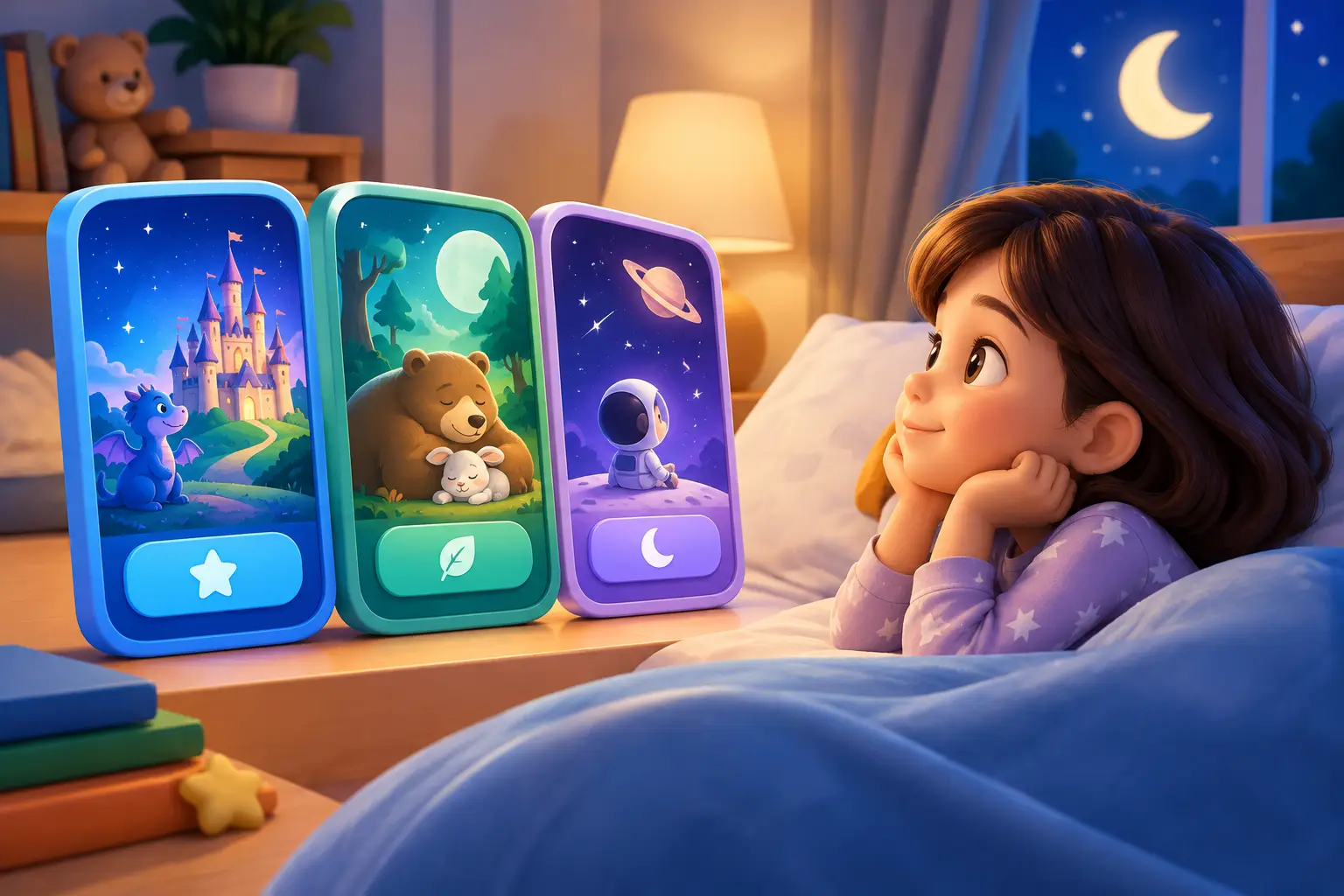
Bedtime can be the softest part of the day - and sometimes the most difficult. When little ones are asking for one more story, or need reassurance after a busy day, a tale that features their own name and familiar details can help them settle. This custom story apps comparison looks beyond the novelty of seeing a child in a story. It considers what makes an app genuinely helpful for families building a calm, meaningful reading ritual.
A personalised story app should not replace the comfort of reading together. At its best, it gives parents and carers a simple way to create a fresh story, then leaves room for cuddles, questions and the small moments children remember. The right choice depends on your child’s age, your family’s routines and how you feel about sharing children’s information online.
What to compare before choosing a story app
Many story apps promise a magical adventure in minutes. That can be useful on a packed evening, but speed alone does not make a story worth returning to. Look at the full experience: how a child is represented, what the stories feel like, where they are saved, who can see them and whether the app supports the kind of bedtime you want to create.
A good comparison begins with one practical question: will this make storytime easier and more personal for our family? An app that creates a funny, one-off tale may suit an afternoon activity. For nightly reading, families often value gentler pacing, age-appropriate language and a reliable place to revisit favourite stories.
Custom story apps comparison: personalisation that feels personal
The most visible difference between apps is the depth of personalisation. Some let you add a name to a fixed story. Others allow you to create a character using details such as appearance, interests, family members or favourite places. Neither approach is automatically better. A quick name swap can be ideal when you need a story before the lights go out, while richer character creation can make a child feel truly recognised.
Consider how much control you want. More choices can produce a closer match for your child, but too many forms and settings can turn a peaceful evening into a task. The best balance is usually a simple child profile that can be used again, rather than asking you to re-enter the same details every time.
It is also worth noticing whether the child remains the hero throughout the story. A name in the opening paragraph is lovely, but children tend to respond more strongly when their character makes kind choices, solves a small problem or helps a friend. Personalisation has more emotional weight when it shapes the adventure rather than sitting on top of it.
For siblings, check whether the app supports separate profiles. This helps each child have stories that reflect them, without mixing up their preferences or repeatedly changing details. It can also make shared reading more thoughtful: one evening may belong to a child’s own adventure, while another can be a story where both children play a part.
Story quality matters more than endless options
A large catalogue can sound appealing, yet bedtime rarely calls for endless choice. Children often ask for the same story because familiarity feels safe. What matters is whether stories are well paced, warm and easy to read aloud when you are tired.
Look for an app that matches stories to your child’s developmental stage. Younger children may enjoy clear, comforting plots, gentle repetition and simple language. Older children may prefer a little more mystery, humour or choice. In either case, a bedtime story should leave a child feeling settled rather than overstimulated.
Pay attention to tone as well as topic. Adventures can be exciting without becoming frightening, and a story about a tricky feeling can offer reassurance without sounding like a lesson. Previewing a story before sharing it with your child is especially valuable if they are sensitive to particular themes.
A useful app should also respect the adult reader. Text that is broken into manageable sections, with a calm reading experience and no distracting clutter, makes it easier to stay present. The point is not to hand a screen to a child at bedtime. It is to support a moment of connection between you and them.
Privacy deserves a place in every comparison
Personalisation requires information, and information about children should be handled with care. Before creating a profile, take a moment to understand what the app asks for and why. A child’s first name, age range or favourite animal may be enough to create a special tale. Be cautious if an app requests details that do not seem necessary for storytelling.
Clear privacy information is a reassuring sign. Parents and carers should be able to understand how accounts work, how stories are stored, whether information is shared and how they can manage or remove a child profile. Look for plain language, accessible settings and a dedicated children’s privacy notice rather than vague promises.
Sharing is another important detail. Some families love sending a finished story to a grandparent or saving it for a special occasion. Others prefer to keep every story inside their own account. Choose an app with sharing controls that feel clear, deliberate and easy to change. A private family story library is often more valuable than a public feed of children’s content.
Saved stories turn a novelty into a family ritual
The ability to return to completed stories is easy to overlook until your child asks, "Can we read the moon one again?" A well-organised library lets you find beloved adventures without scrolling through a jumble of old creations. It also gives parents a gentle record of the stories that mattered at different ages.
Check whether stories can be named, viewed later and grouped around each child’s profile. If you create stories together, an orderly library helps preserve that shared effort. Serene Stories is designed around this idea: children can have their own characters, while families can create, revisit and share stories from a personal collection.
Think about access, too. If bedtime happens in different homes or with different carers, a secure account can make it easier to continue the ritual wherever your child is sleeping. Convenience should still sit alongside sensible account security and adult control.
Cost, trials and the value of repeat reading
Pricing models vary. Some apps charge per story, some offer subscriptions, and others provide limited free access before asking you to pay. There is no single right model. A family that reads a personalised story once a month may prefer paying only when they create one. A family that uses stories most evenings may find a subscription better value.
Before committing, look at what is included. Does the price cover character profiles, saved stories and sharing? Are there limits on story creation? Can you try the reading experience before entering payment details? The clearest services explain these choices without making it difficult to understand what you are agreeing to.
Value is not simply about the number of stories generated. One tale your child asks for repeatedly can mean more than dozens they never finish. Choose the service that encourages rereading, conversation and comfort rather than constant novelty.
Which kind of personalised story app suits your family?
If your main priority is a fast distraction, a simple app with light personalisation may be enough. If you are building a dependable bedtime ritual, choose one that makes it easy to create a child character once, produces stories with a calm emotional arc and saves them in a library you can return to.
Families with privacy concerns may reasonably favour an app that collects fewer details and explains its safeguards clearly, even if it offers fewer custom features. Families with several children may place more value on separate profiles and stories that can be shared thoughtfully. It depends on the moments you hope the app will support.
Try to picture an ordinary Tuesday evening rather than the perfect one. You may be short on time, your child may be restless, and you may only have energy for a few pages. The right app should make it easier to say, "Let’s see what happens to you tonight," then help you close the day with a little more calm and wonder.