
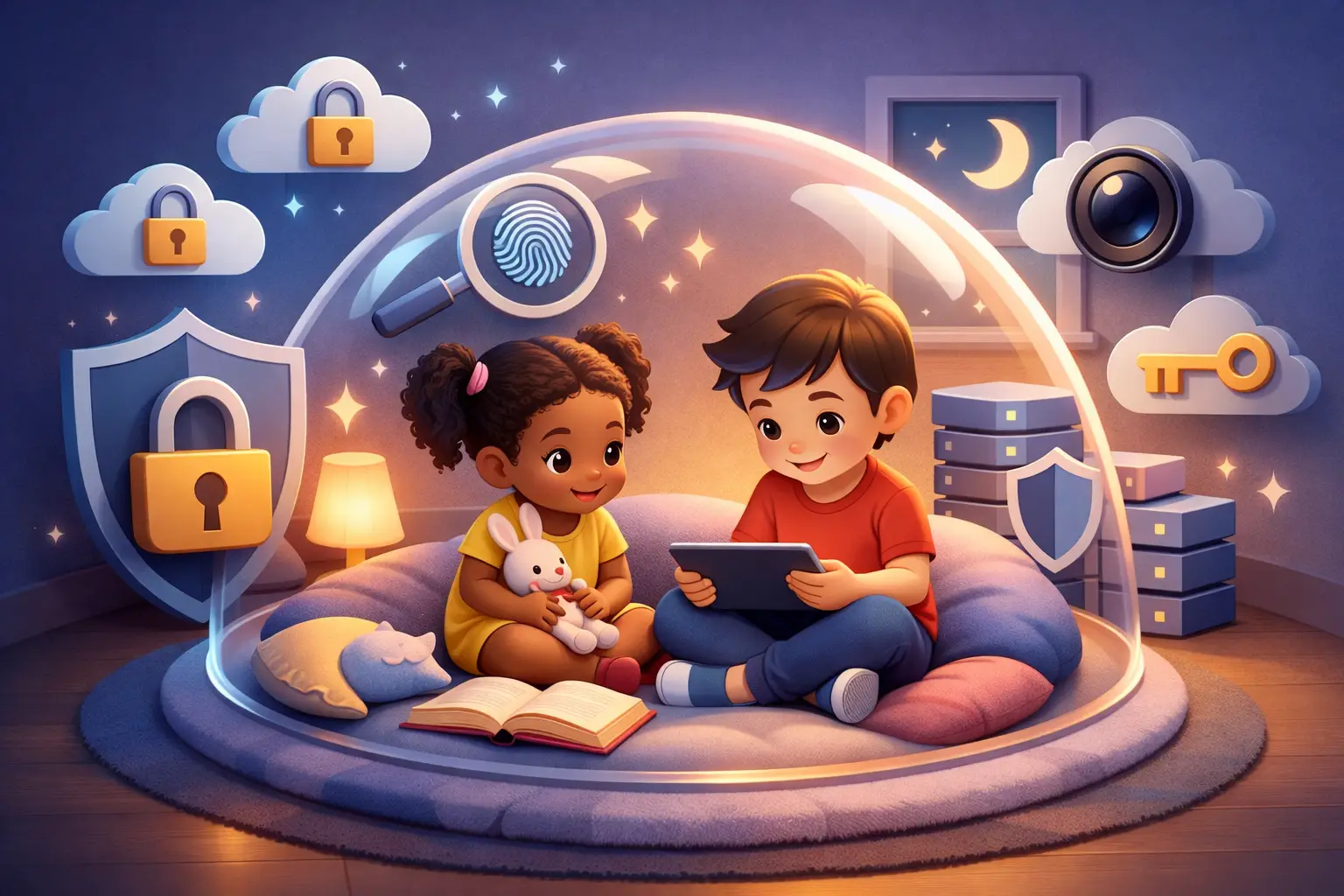
A child’s name can turn a bedtime tale into something quietly magical: suddenly, they are not simply hearing about a brave explorer or a gentle dragon, they are the hero. That personal touch is powerful, which is why children’s data privacy deserves the same care as the story itself. Parents should be able to create moments of wonder without wondering where their child’s information may travel.
Personalised digital experiences do not have to feel complicated or worrying. They do, however, ask families to make a few thoughtful choices about what information is needed, how it is used and who can see it. A trustworthy children’s service makes those choices clear, simple and respectful.
Why children’s data privacy feels personal
Adults often share information online without much thought. An email address, a birthday or a photo may seem like ordinary details, especially when an app promises a useful or enjoyable experience. For children, those details deserve a higher level of protection. Young children cannot fully understand what information is being collected, how long it might be kept or what sharing could mean later on.
This is especially true when an experience is designed around their identity. A personalised story may use a child’s first name, favourite animal, hair colour or a small detail about the sort of adventures they enjoy. Used carefully, these details help create a story that feels made just for them. Used carelessly, they can reveal more than a family intended.
The aim is not to remove all personalisation. It is to keep it proportionate. A wonderful bedtime story rarely needs a full date of birth, a home address, a school name or precise location. The best approach is to collect the smallest amount of information needed to create the experience, then treat it with care.
What information does a personalised story app need?
It depends on how the service works. Some details are usually there to help the adult manage an account, such as an email address, password and payment information where relevant. Other details may be added to make stories feel personal, such as a child’s name, character traits, interests or appearance.
There is a meaningful difference between information supplied for a story character and information that identifies a child in the wider world. “Loves stargazing” gives a story a lovely starting point. “Attends Oakfield Primary and walks home on Maple Road” is not needed for a magical adventure and should raise questions.
Photos, voice recordings and location data call for particular caution. They can be useful in some products, but they are more sensitive than a favourite colour or a made-up character name. Before adding them, parents and carers should understand whether they are essential, where they are stored and whether they can be deleted easily.
A family may also choose to use a nickname or a character name. That can preserve the joy of recognition while reducing the amount of directly identifying information in a profile. It is a practical option, not a rule. What matters is that the choice feels clear and comfortable for the grown-up creating the account.
The questions worth asking before you sign up
Privacy notices can seem like something to skim while a child is already choosing the hero’s cape. Yet a few minutes spent checking the basics can make a real difference. Plain language is a good sign. Families should not need specialist knowledge to understand how a children’s service handles information.
Before creating a profile, look for clear answers to these questions:
- What information is collected about the parent or carer, and what information is collected about the child?
- Why is each type of information needed to provide the service?
- Is children’s information used for advertising, behavioural profiling or purposes beyond creating and managing the experience?
- Can a parent review, change or delete a child profile and saved content?
- Who can access stories that are shared, and can sharing be switched off or limited?
A thoughtful provider will explain these points without hiding the important details behind vague phrases. It should also make account controls easy to find, rather than placing them somewhere families are unlikely to look.
For UK families, data protection rules give children additional consideration, and organisations must take particular care when designing services likely to be used by them. That does not mean every app will look the same. It does mean companies should consider children’s best interests from the beginning, including in their privacy settings, data collection and design choices.
Privacy settings are part of the bedtime routine
A privacy setting is not as exciting as choosing a moonlit forest or a friendly sea monster, but it can still become part of setting up a safe family space. Take a moment to visit account settings after creating a profile, rather than assuming the default choices suit your family.
Start with sharing. A story sent to a grandparent can be a beautiful way to keep a loved one close, particularly when distance makes bedtime visits difficult. But check what the recipient can see, whether the story can be forwarded and whether a shared link expires. The right setting may differ depending on whether a story is staying within a small family circle or being shared more widely.
Next, look at notifications and marketing preferences. A bedtime story service should not need to turn a child’s profile into a source of promotional messages. Parents may be happy to receive occasional updates about their own account, but that is different from using a child’s interests to shape advertising.
Finally, revisit profiles from time to time. Children grow quickly. The superhero phase may become an obsession with planets, then a love of inventing silly detective mysteries. Updating a profile can keep stories fresh, while removing details that no longer need to be there.
Small habits that protect children’s data
Good privacy does not rely only on the company behind an app. A few family habits can help protect accounts and the stories held within them.
Use a unique, strong password for the adult account, and do not give login details to children who are too young to manage them safely. If more than one carer uses the service, decide who should have access and avoid leaving accounts signed in on shared devices.
It is also wise to pause before adding highly specific details into free-text prompts. A story can feel deeply personal because a child is kind, curious or determined to rescue a lost puffin. It does not need details about their daily route, family circumstances or personal worries. If a child suggests including something sensitive, a parent can gently reshape it into a fictional version that keeps the comfort and imagination intact.
When stories include other children, ask before using their names or recognisable details. A playdate adventure is more considerate when the visiting friend becomes a cheerful fictional companion, unless their parent has clearly agreed to their information being included.
What good privacy looks like in a family-first service
Trust is built through everyday design decisions. A family-first storytelling platform should clearly separate adult account details from child character details. It should give parents meaningful control over profiles, story libraries and sharing, with straightforward ways to correct or remove information.
It should also avoid asking for information simply because it might be useful someday. Data that is never collected cannot be misused, exposed or retained longer than a family expects. This principle can sound technical, but it is really about respect: a child’s identity is not an ingredient to gather in excess.
At Serene Stories, the magic of making a child the hero is most meaningful when it sits alongside that respect. Personalisation should feel like a warm invitation into a story, not a reason to give away more of a family’s private life than necessary.
Let curiosity lead, not worry
Children will remember the feeling of being seen in a story: the brave choice, the giggle at a familiar favourite animal, the calm ending before sleep. Parents can help keep those memories light by choosing services that are clear about privacy and by sharing only what adds genuine value to the tale.
The sweetest stories often begin with very little: a name or nickname, a spark of imagination and a child ready to be the hero. That is more than enough for an adventure worth keeping.