
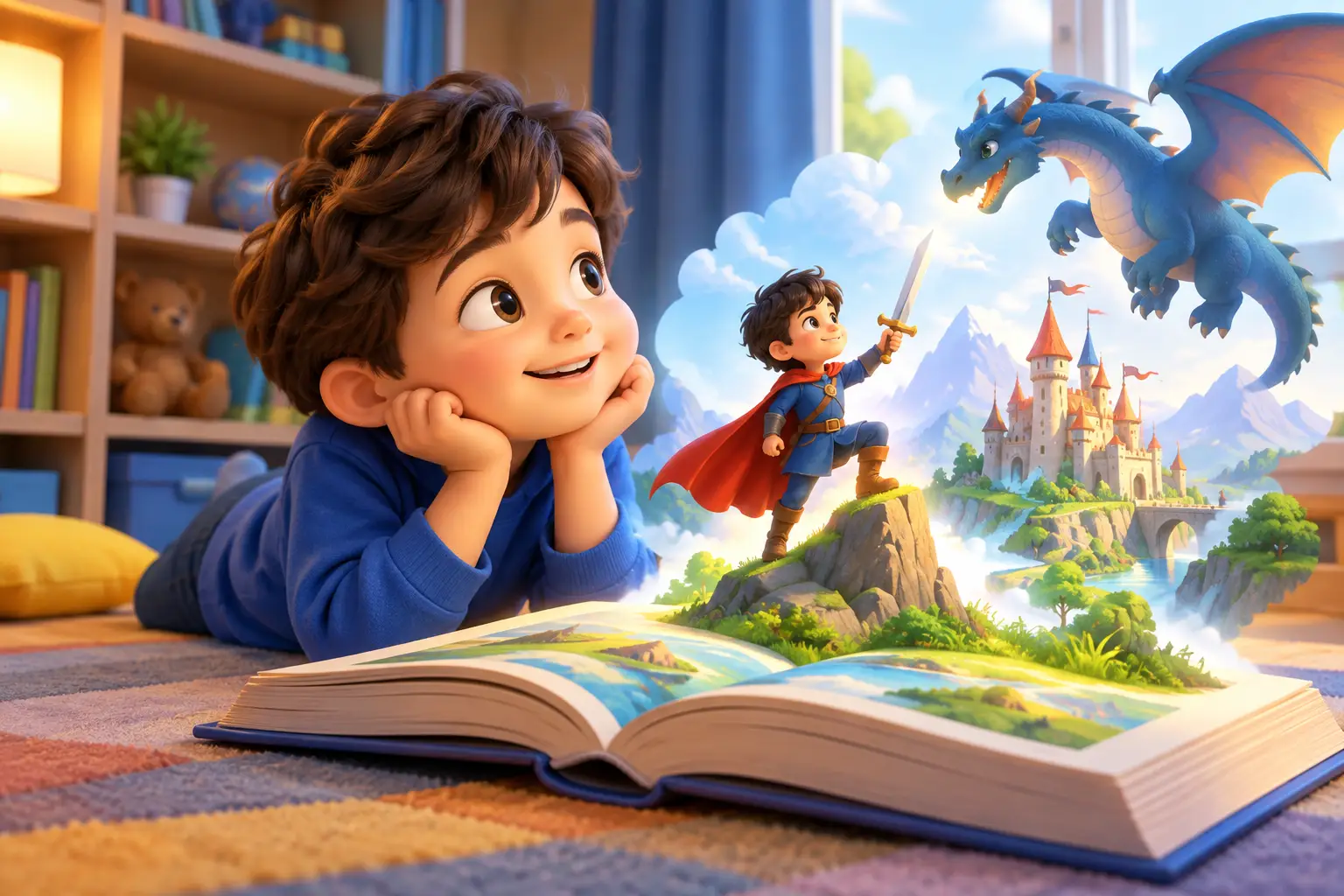
A child who has spent the day being told where to sit, when to hurry, and which shoes to wear can end the evening as the one who helps a lost moon find its way home. That small change matters. Hero narratives give children a safe place to imagine themselves as capable, kind, and wonderfully known - just before sleep.
At bedtime, children are not looking for a lesson wrapped in a lecture. They are looking for closeness, comfort, and a story worth carrying into their dreams. When the hero shares their name, favourite animal, or a familiar detail from their world, the story can feel less like something happening far away and more like an invitation to step into possibility.
What hero narratives give children
A hero narrative is not simply a story where the main character wins. For young children, it is a story in which the central character faces a moment of uncertainty, makes a choice, receives help when needed, and discovers that they can contribute something meaningful.
That contribution might be very small. Perhaps the hero notices that a shy dragon has been left out of a picnic. Perhaps they remember the song that calms a worried cloud. Perhaps they carry a lantern through a dark wood with a friend by their side. These are gentle adventures, but they reflect feelings children genuinely recognise: nervousness, curiosity, loneliness, excitement, and the wish to be helpful.
When a child sees a character like themselves meet those feelings with care, they get to rehearse emotional possibilities. They can wonder, “What would I do?” without being put on the spot. They can enjoy bravery without having to be fearless.
This is especially valuable at the end of a busy day. Bedtime is often when worries that stayed quiet during school, nursery, or play come closer to the surface. A warm story does not need to solve every worry. It can simply offer a reassuring pattern: something tricky happens, the hero is not alone, and there is a gentle way forward.
Being the hero is not about being perfect
Some stories mistake heroism for being the strongest, cleverest, or loudest person in the room. That can be entertaining, but it leaves little space for the quieter strengths many children are already practising.
A thoughtful hero can ask for help. A nervous hero can take one small step. A hero can apologise after getting something wrong, listen carefully to a friend, or make room for someone else. These are the kinds of qualities parents and carers often hope to encourage, not through pressure, but through repetition and example.
Personalised stories make this idea feel particularly close. When a child hears their own character show patience or kindness, it can create a lovely moment of recognition. The aim is not to tell them who they must be. It is to let them see that courage has many shapes.
Why personalised hero narratives feel different
Children have always placed themselves inside stories. They pretend to be explorers in the garden, doctors for cuddly toys, or astronauts travelling from the sofa to the moon. Personalisation meets that natural imaginative instinct and gives it a home in the bedtime routine.
A generic story may have a charming hero named something unfamiliar. A personalised story can include details that make a child smile because they belong to them: their name, a beloved pet, a favourite colour, or the type of adventure they would choose. Those details are not just decorative. They signal, “There is room for you here.”
For a child who is shy, newly settling into a group, welcoming a sibling, or adjusting to a change in routine, that feeling of being recognised can be quietly powerful. It may also make reading together easier. Instead of persuading a reluctant listener to pay attention, a parent can begin with the simple delight of, “Look who is in this story tonight.”
Of course, personalisation is not a magic answer to every bedtime wobble. Some evenings call for a very short tale, a familiar book, or simply a cuddle and the same goodnight words as always. The value of a personal story is that it offers another gentle option, one that can meet a child where they are without making bedtime feel like a performance.
The story works best when the child still has room to imagine
Too many details can make a story feel crowded. The most memorable personalised tales leave spaces for a child’s own ideas: what the moon garden looks like, what snack the fox packed, or how the hero felt when they first heard the enchanted bell.
Those pauses are part of the magic. They invite conversation, prediction, and play. A child may interrupt to add a purple bicycle, a talking badger, or a new ending. That is not getting distracted from the story. It is a sign that the story has become theirs.
Building a calmer bedtime ritual
The best bedtime routines are usually simple enough to repeat. A wash, pyjamas, a drink of water, a story, a cuddle. The order becomes familiar, and familiarity helps the body and mind begin to slow down.
Hero stories can sit naturally within that rhythm when they are chosen with sleep in mind. A gentle pace, a secure ending, and a sense of warmth matter more than a dramatic cliffhanger. There is a place for exciting quests, but a bedtime adventure should eventually guide everyone back to safety: the stars are shining, friends are nearby, and home is waiting.
Try making story time a small shared ritual rather than another item to complete. Let your child choose between two kinds of adventure. Ask one easy question afterwards, such as, “What was your favourite brave thing the hero did?” Then allow the answer to be as short or as imaginative as they wish.
If your child asks for the same story again and again, that is often a comfort rather than a lack of curiosity. Repetition lets children notice new details and return to an emotional ending they trust. You can honour that need while gently adding variety on other nights.
At Serene Stories, personalised bedtime tales are designed around this kind of connection: a child at the centre of a magical adventure, with stories families can return to and share as part of their own collection of memories.
Choosing the right kind of hero story
The right story depends on the child and the evening. After an overstimulating day, a quiet adventure with soft stakes may be more welcome than a fast-paced rescue. If your child is worried about trying something new, a story about taking a first step can feel encouraging. If they are full of energy, a playful quest may help them settle through laughter before the ending grows calm.
It also helps to avoid turning every story into a lesson. Children can sense when a tale is trying too hard to correct them. Rather than creating a hero who always shares perfectly or never gets cross, choose stories where feelings are allowed and kindness is discovered along the way.
A good hero story says, in effect, “You can have big feelings and still be loved. You can make a mistake and still find your way. You can be small and still make a difference.” Those messages are gentle enough for bedtime, yet they can linger long after the light is out.
Tonight, perhaps let your child be the one who finds the missing star, comforts the baby griffin, or teaches a lonely giant how to laugh. Then close the book, tuck them in, and remind them that the bravest part of every adventure is often knowing they have a safe place to come home to.