
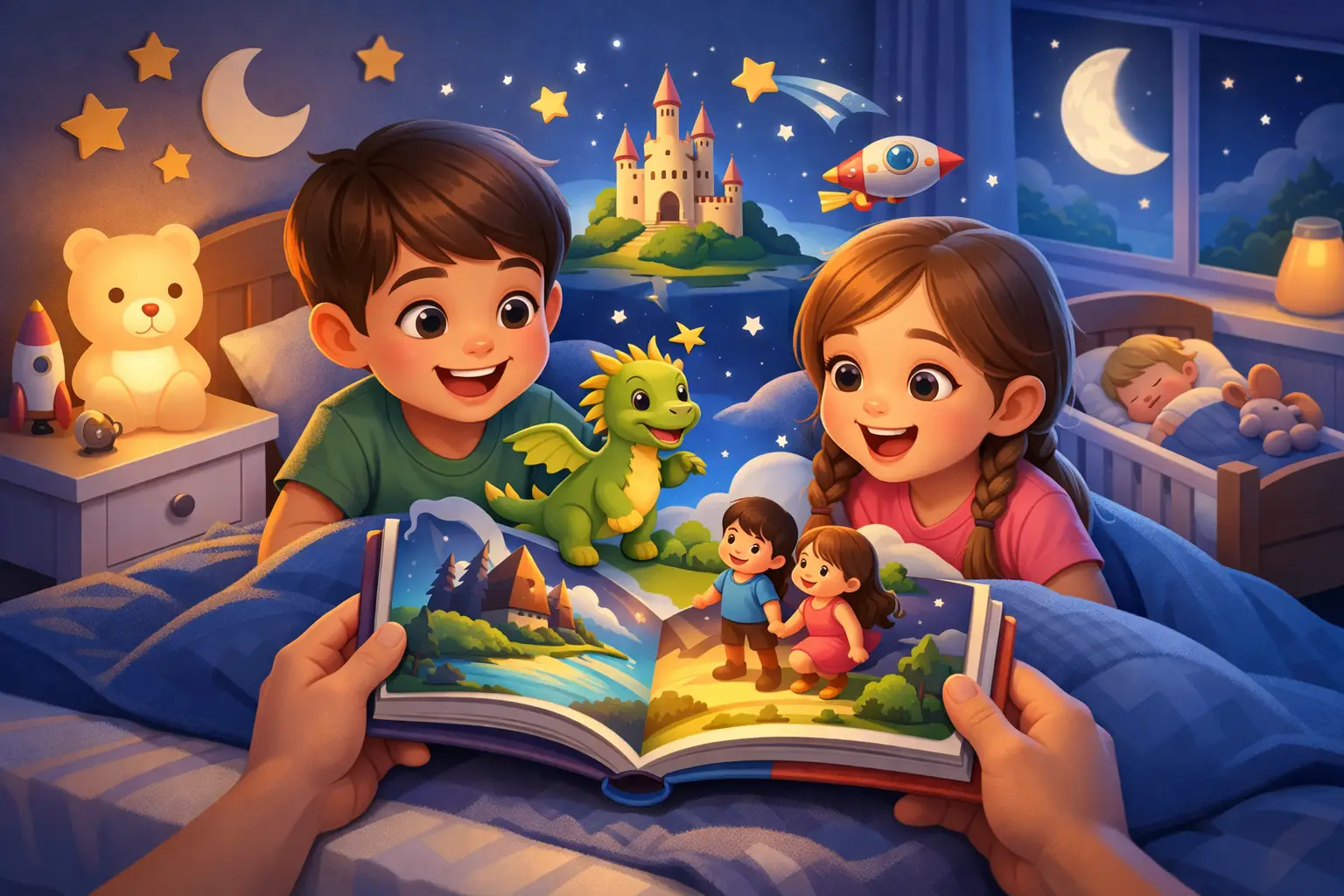
One child wants to be the brave explorer. The other would rather be the clever keeper of a secret map. By the time the pyjamas are on, both are tired, perhaps a little wiggly, and neither wants to feel like the sidekick. This is where personalised stories for siblings can bring a little peace to a busy bedtime.
A shared story does not have to mean one child takes centre stage while the other waits for their turn. When both children are woven into the adventure, they can each be recognised for who they are - their favourite animal, their bold ideas, their gentle heart, or the way they always notice the small details. The result is not simply a more exciting bedtime read. It is a ritual that says: there is room for both of you here.
Why siblings respond to stories made for them
Siblings share a home, routines and often a great deal of attention from the same grown-ups. They also need moments that honour them as individuals. A personalised story can do both at once.
When children hear their names and traits reflected in a magical tale, the story feels closer than a familiar book from the shelf. They may listen more carefully because the next page could reveal what their character does, chooses or discovers. For younger children especially, this sense of recognition can make settling down feel less like being asked to stop playing and more like stepping into a comforting world made with them in mind.
There is a lovely social benefit, too. Shared stories give siblings a safe way to see one another in a positive light. The child who is usually described as energetic can become the quick-thinking hero. The quieter sibling can be the one who hears the moon whisper the answer. Neither role has to be bigger or better. They simply matter in different ways.
That distinction is useful when siblings are in a competitive phase. A story cannot solve every squabble over the last biscuit or the best seat in the car, but it can offer a gentler script. Instead of competing for attention, children can imagine their characters working together to help a lost dragon, carry a lantern through the woods or return a tiny star to the sky.
Personalised stories for siblings work best with balance
The most memorable sibling adventures do not make the children identical. They give each child a meaningful part to play.
Think about the strengths your children already show. One may be determined, imaginative or full of questions. Another may be caring, hilarious, patient or wonderfully observant. These qualities can guide the story without placing either child in a fixed box. A child who is nervous about trying new things may enjoy being the hero who takes one small, brave step. A child who often takes charge may enjoy learning that asking for help is part of a successful quest.
Balance also means sharing the exciting moments. If one character discovers the hidden door, the other might know the song that opens it. If one saves the day with a daring idea, the other may offer the kindness that makes the solution possible. Children notice fairness quickly, particularly at bedtime when they are tired and feelings can run close to the surface.
It helps to avoid comparing siblings in the story. Phrases such as “the smartest” or “the best” can unintentionally turn a cosy adventure into a contest. Instead, let the story celebrate complementary gifts. A brave heart, a thoughtful question and a funny idea can all be just what the adventure needs.
Choosing the right kind of shared adventure
The best story shape depends on your children, their ages and the kind of evening you are having. On a calm night, a gentle journey through a glowing garden or a cloud village may be perfect. After a difficult day, a tale about finding a safe path home can make space for reassurance without turning bedtime into a big discussion.
For siblings close in age, a true partnership often feels natural. They can be co-captains of a moonlit boat, guardians of a sleepy forest or friends on a mission to return lost dreams. Give them separate moments of agency, then bring their choices together near the end.
For a larger age gap, it may work better to give the older child a role that feels capable without making them responsible for the younger one. They might be the reader of ancient clues while their sibling speaks the secret language of fireflies. The younger child remains essential to the adventure, and the older child can enjoy a role with a little more complexity.
If there are more than two children, keep the plot simple. A large cast can be joyful, but too many twists may leave everyone waiting for their name. A shared destination, one clear problem and a special contribution from each child are usually enough. The aim is a warm ending, not a complicated epic.
Make bedtime personal without making it complicated
A meaningful story routine does not need a long build-up. In fact, the easiest rituals are the ones families can return to on ordinary Tuesday evenings.
You might begin by asking one small question: “Where shall our adventure start tonight?” Let the children choose between the sea, a castle, a garden or the stars. If choices cause more debate than delight, make the decision yourself and invite them to add one detail each. One child might choose a friendly owl, while the other chooses a sparkling red umbrella.
Then keep the atmosphere predictable. Dim the lights, settle into the same reading spot and use a quieter voice as the adventure moves towards home. Familiar rhythms help children understand that the day is ending. The story can still be full of magic, but its final pages should feel safe: a warm light in the window, a promise that the characters will meet again, or a peaceful journey back to bed.
Digital storytelling can make this easier to repeat. With Serene Stories, parents and carers can create child characters, keep completed adventures in a personal story library and return to favourite tales when a particular night calls for something familiar. The important part is not the screen itself. It is the shared attention around the story and the sense that it belongs to your family.
Let stories support real sibling connection
The conversation after a story can be as valuable as the story itself, provided it stays light. Rather than asking children to explain a moral, try a simple question: “Which part did you like being in?” or “How did the heroes help each other?” Their answers may be silly, brief or surprisingly thoughtful.
If there has been tension between siblings, resist the urge to use the story as a lesson disguised as entertainment. Children can spot that a mile away. Instead, choose an adventure that naturally includes cooperation, repair or understanding. Let the characters practise what the children are still learning, without making either child the villain.
You can also return to favourite story moments during the day. A child heading into nursery or school might remember how their character found courage at the whispering bridge. A sibling disagreement may soften when you remind them that even the two moon explorers needed different ideas to find their way. These references work best as invitations, not instructions.
A small ritual with a lasting place
Not every bedtime will be perfectly calm. There will be nights when someone is cross, overtired or determined to negotiate for one more chapter. Personalised sibling stories are not a magic answer to family life. But they can offer a dependable place to land - one where each child is seen, both children belong, and the day can end with them on the same side.
Tonight, let the adventure be gentle enough for sleepy eyes and special enough that each child listens for their own moment of wonder. In a shared story, being a hero does not mean shining alone. Sometimes it means carrying the lantern together.