
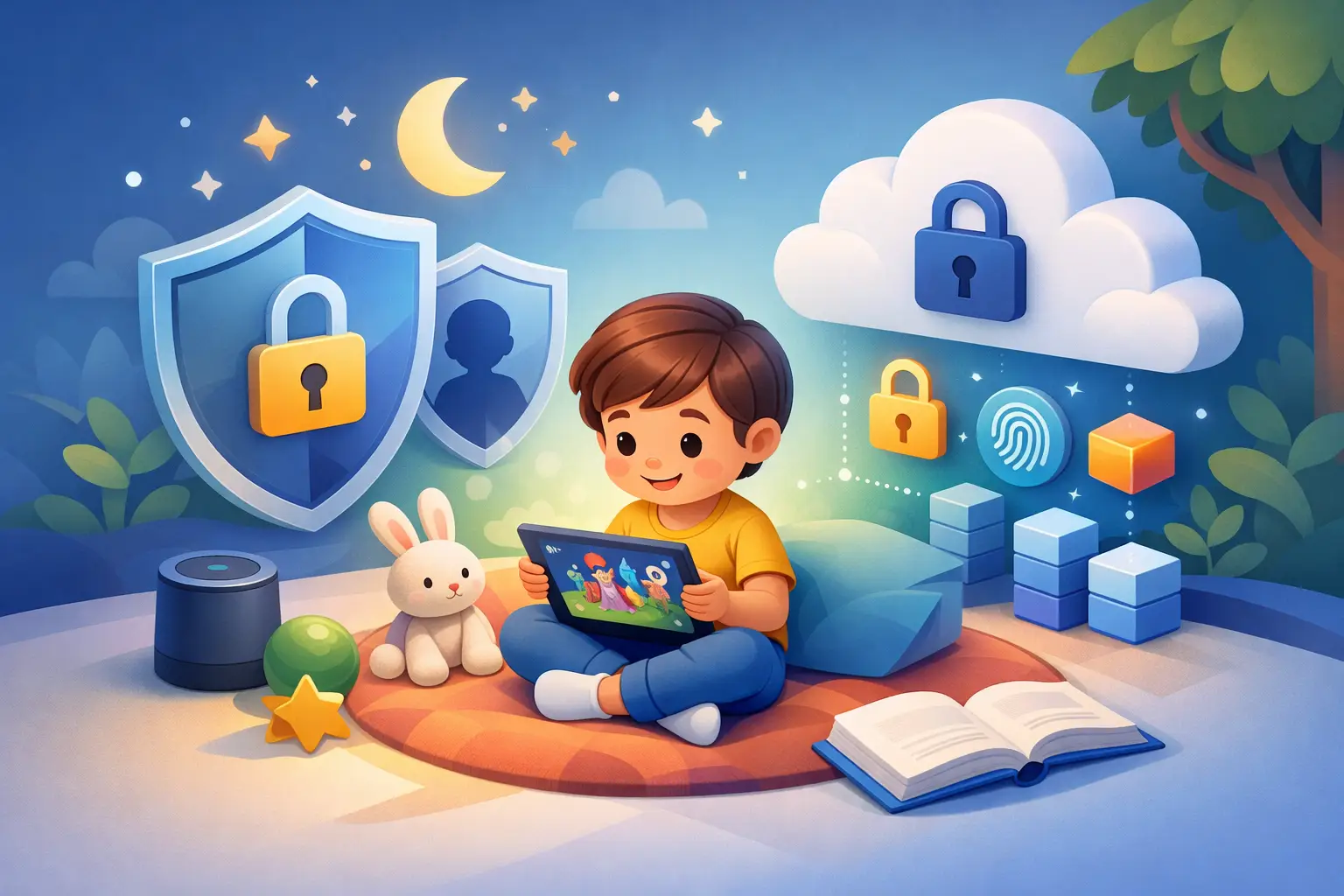
A child’s name can turn an ordinary bedtime tale into something wonderfully memorable. When they become the brave explorer, kind dragon keeper or moonlit adventurer, the story feels made just for them. Child privacy helps make sure that sense of magic stays where it belongs: safely within the family’s bedtime ritual.
Personalised digital experiences do not have to feel complicated or worrying. They do, however, ask parents and carers to pause for a moment before adding details, creating profiles or sharing a finished story. A few thoughtful choices can protect a child’s information without taking away the joy of seeing them as the hero.
What child privacy means in a story app
Child privacy is about treating information connected to a child with particular care. That includes obvious details, such as a child’s full name, date of birth, photo or location. It also includes the smaller details that bring a personalised story to life: favourite animals, family nicknames, interests, appearance, school-year references and the stories saved to their library.
Not every detail carries the same level of risk. A first name or a favourite colour may be enough to make a story feel personal, while a full name, home address, school name or daily routine rarely adds anything meaningful to the tale. The most comforting approach is usually the simplest one: share only what helps create the story your child will love.
For parents and carers, privacy also means knowing who is in charge. An adult should create and manage the account, decide what details are included in a child character, and choose whether a story is kept private or shared. Young children can happily suggest the hero’s powers, pet or dream destination, while the grown-up handles the settings.
Personalisation should feel joyful, not revealing
A magical story does not need a complete biography. Often, the most enchanting details are the least sensitive: a child who loves yellow wellies, befriends a shy fox or carries a sparkling torch through a forest of silver leaves. These details give a story warmth without exposing information a family would rather keep close.
Before creating a character, consider whether each piece of information is necessary for the experience. If the answer is no, leave it out. Instead of using a surname, use a first name, nickname or invented hero name. Rather than naming a school or neighbourhood, set the adventure in a cloud castle, secret garden or seaside village. A little imagination can be a practical privacy tool.
Photos deserve extra thought. A photo may be a lovely keepsake, but it can identify a child more directly than a written description. If an app does not need a photo for the story experience, there is no reason to add one. If you choose to use one where it is supported, check who can view it, whether it appears in shared content and how you can remove it later.
Keep sensitive details out of the storyline
Some information is best kept firmly outside a bedtime story, even when a child finds it exciting to mention. Avoid including full names, addresses, telephone numbers, school names, regular travel plans, medical information, passwords or anything that could make a child easier to identify offline.
The same principle applies to family information. A story can celebrate a grandparent, sibling or beloved pet without recording someone’s contact details, workplace or private circumstances. A gentle tale about a family picnic needs no real-world map to feel special.
Check who can see and share each story
A saved story library can become a treasured collection - a record of the characters and adventures your family has enjoyed together. But the ability to share a story calls for a small check before pressing send.
Start by asking who the intended reader is. Sharing directly with a trusted grandparent or another carer may feel right. Posting a story publicly, forwarding it widely or sharing it in a large group is a different choice, particularly if the story includes a child’s name, image or recognisable family details.
It also helps to look at the story itself, not only the sharing setting. A child may be represented by a character rather than a photograph, yet details in the text could still reveal more than you intended. Read the story as if it were being seen by someone outside your close circle. Would you still be comfortable with every detail?
If you are unsure, choose the quieter option. You can always share later, or create a version with a hero name and fewer personal details. Privacy is not about making family moments secret. It is about giving families a meaningful say in where those moments travel.
Questions worth asking before you sign up
A trustworthy children’s experience should make its approach to information clear and easy to find. You should not need specialist knowledge to understand what happens to the details you provide.
Take a moment to read the privacy information and children’s privacy notice. Look for plain answers to a few practical questions: what information is collected, why it is needed, how long it is kept, whether it is shared with other companies and how you can ask for it to be changed or deleted. It is also useful to understand how cookies or similar technology may be used on a website.
You may find that an app needs certain information to create an account, save stories or remember a child character. That can be reasonable. The key is proportionality. Information should support the experience, not turn a sweet bedtime routine into a detailed record of a child’s life.
For a platform such as Serene Stories, the goal is to let families create magical, personalised bedtime stories while giving adults clear control over their account, characters and saved stories. Clear settings, accessible policies and straightforward choices help turn that promise into everyday reassurance.
Review profiles as your child grows
Children change quickly. The dinosaur expert becomes a space fan; the character created at age four may not suit a child at seven. Reviewing a child profile from time to time is a good habit, both for the stories and for privacy.
Remove details you no longer need, update a nickname if your child prefers one, and delete old characters or stories that no longer belong in the library. If a child is old enough to have an opinion, invite them into the conversation in an age-appropriate way. Asking, “Would you like this story to stay just in our family library?” teaches that personal information deserves care.
Small habits that protect the whole family
Privacy is not only about what goes into a story. It also depends on how the family account is looked after. Use a unique, strong password and avoid sharing it beyond the adults who need access. Sign out on shared devices, especially tablets used by visitors or older children, and keep device screen locks switched on.
Turn on account security features if they are offered, and make sure the email address connected to the account is one an adult regularly checks. That way, password reset notices, account updates and privacy requests remain in the right hands.
Be careful with copied text and screenshots, too. A screenshot of a charming page can still show a child’s name, profile image or account details. Cropping or covering those details before sending it to family is a simple extra layer of care.
If something does not look right - an unfamiliar account message, a sharing choice you did not expect, or information you want removed - act promptly. Update the password, review settings and contact the service through its official support route. Parents and carers should never feel awkward about asking how a child’s information is handled.
Let bedtime stay a safe little world
The best personalised stories make room for children to feel seen: their courage matters, their ideas shape the adventure and they get to return to a world that remembers them. Privacy supports that feeling. It keeps the story focused on imagination rather than exposure.
Tonight, when your child chooses the hero’s name or the colour of their flying boat, you can keep the details light, lovely and yours. The quiet confidence that comes from knowing you have protected their little world is part of the bedtime comfort, too.