
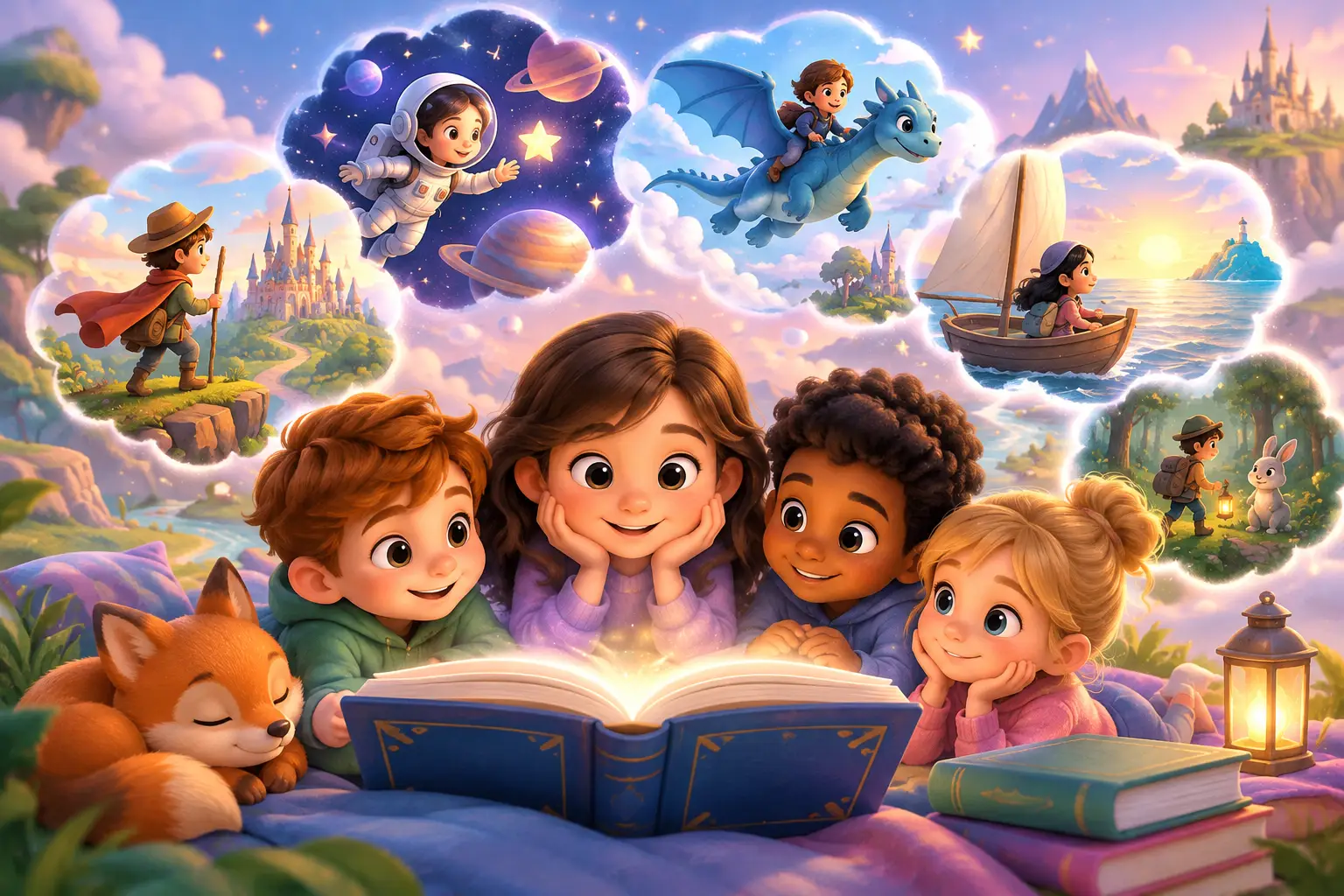
A small worry can feel enormous at bedtime. Perhaps your child is nervous about a new class, missing a friend, or wondering whether they can manage something unfamiliar. The most memorable child character story examples do not brush those feelings aside. They give them a gentle shape, then let a child-sized hero meet them with curiosity, kindness and a little magic.
A personalised story can make this especially meaningful. When the hero shares your child’s name, favourite animal or big interest, the adventure can feel like an invitation: what might I try if I were in this story? The aim is not to provide a perfect answer to every difficult moment. It is to create a calm, imaginative space where feelings can be noticed and talked about together.
What makes a child character story feel special?
A strong child character has a clear wish, a manageable challenge and a choice to make. They might want to join a game, find their way through a misty wood, protect a tiny dragon’s egg, or sing at the moonlit festival. The challenge should matter to the hero, even when it looks small to an adult.
The most comforting stories avoid making bravery mean never feeling scared. Instead, bravery can look like asking for help, taking a pause, trying one small step, or being honest about what feels hard. Let the character stay themselves throughout the adventure. A quiet child need not become the loudest person in the room to have a wonderful ending.
Details bring the story close to home. A child who loves dinosaurs may travel with a gentle triceratops. A child fascinated by space may mend a lost constellation. A favourite colour, a beloved grandparent’s biscuit recipe, a treasured soft toy or a pet can all become part of the magical world without taking over the plot.
8 child character story examples for gentle bedtime adventures
1. The Lantern for the First Day
Mila is starting at a new school, and her tummy feels full of fluttering moths. That night, a friendly firefly gives her a tiny lantern that only shines when she names one thing she can do. Mila remembers that she is good at drawing, sharing snacks and asking thoughtful questions.
At the school gates in the story, the lantern does not make the new day disappear. It simply gives Mila a warm glow while she takes the first step inside. This kind of tale works well before a school change or any unfamiliar event because it honours uncertainty while making room for capability.
2. The Cloud That Would Not Join In
Arlo sees a little cloud following the other clouds but never joining their sky games. He assumes it wants to be alone, until he learns that it is unsure how to ask. Together, they invent a game where everyone makes shapes from raindrops.
The story can open a tender conversation about friendship: how might someone show they would like to play? What could Arlo say if he felt left out? Keep the ending realistic and kind. The cloud may make one new friend rather than suddenly becoming best friends with everyone.
3. The Dragon Who Needed a Turn
Nora and her tiny dragon companion both want to steer the moonboat across the Silver Lake. Their tug-of-war makes the boat spin in circles, and they miss the singing reeds they hoped to visit. After a frustrated pause, they discover that one can steer while the other reads the star map.
This story gives sibling rivalry, sharing and frustration a playful setting. Neither character needs to be labelled selfish or naughty. Both have a wish that makes sense, and both help find a fairer way forward. For some children, that is a gentler starting point than talking directly about a disagreement at home.
4. The Night Garden Map
When Leo hears a strange creak at bedtime, he imagines a giant lurking behind the curtains. His teddy reveals a secret map of a night garden, where every mysterious sound belongs to something smaller and friendlier: a hedgehog rustling leaves, a gate clicking in the breeze, a sleepy owl settling on a branch.
A bedtime-fear story should never tease a child for being frightened. Let Leo stay close to a trusted companion, carry a cosy torch or return home whenever he chooses. The ending might be a familiar bedtime ritual, such as choosing a song or checking that his nightlight is glowing, rather than a promise that every night will feel easy.
5. The Festival of Mixed-Up Colours
Sana is chosen to paint the welcome banner for the village festival. When her colours spill together, she thinks she has spoiled everything. Then the paint puddle becomes a map to a hidden garden filled with flowers in shades nobody has named before.
This adventure is lovely for children who feel disappointed when something does not go to plan. It celebrates trying again and seeing possibilities in a mistake, without insisting that every mistake must become brilliant. Sana may still need help washing the brushes and starting part of the banner again. That small practical touch keeps the magic grounded.
6. The Suitcase Full of Stars
Elliot is moving house and worries that his favourite places will forget him. On his final evening, a travelling stargazer lends him a suitcase that can hold glowing memories: the park slide, the neighbour’s cat, the view from his old bedroom window and the sound of rain on the roof.
At the new home, Elliot opens the suitcase and sees that memories can travel with him while new adventures begin. This is a gentle way to explore change without pretending that leaving familiar places is simple. Invite your child to choose what their own imaginary suitcase would hold.
7. The Quiet Roar of the Forest Lion
A young lion called Bea has a roar so soft that only butterflies can hear it. When the forest animals prepare for a noisy parade, Bea wonders if she belongs. Later, she notices a lost mouse who is too frightened by the music to ask for directions. Bea’s quiet voice is exactly what helps.
Stories about confidence are most reassuring when they value different ways of being. Bea does not need to roar louder than everyone else. She learns that gentleness, listening and noticing can be strengths too. You can tailor this idea to a child’s own interests, whether they enjoy building, dancing, observing bugs or telling jokes.
8. The Bridge of Brave Questions
On a quest to return a golden feather to its nest, Ravi reaches a bridge covered in fog. A sign says the bridge only appears for travellers who ask a question. Ravi asks the boat keeper where the path begins, the robin which way the wind is blowing, and his companion whether they can cross together.
This story makes asking for support part of the adventure. It can be useful for children facing a tricky task, a new hobby or a social situation. The hero remains active and capable, while discovering that seeking guidance is one of the clever tools they can carry.
How to turn an example into your child’s story
Start with one everyday moment rather than trying to fit every feeling into a single tale. A child who is worried about swimming lessons may become the keeper of a shy sea horse. A child missing someone may receive letters from a faraway moon rabbit. The magical problem can echo the real one, but it does not need to copy it exactly.
Next, choose two or three details your child will recognise. Their name can be the most obvious choice, but a favourite snack, treasured toy, beloved animal or preferred colour can be just as powerful. Too many details can make a story feel crowded, so leave room for surprise.
Then give the hero a choice. They may ask a companion for help, practise a new skill, apologise after a muddle, or take a quiet moment before continuing. This is where a story becomes more than a string of lovely images. The child character gets to shape the adventure.
Finally, let the ending feel safe, hopeful and unhurried. A celebration can be joyful, but a cup of cocoa under a starry blanket, a reassuring hug from a trusted character or a peaceful journey home can be every bit as satisfying at bedtime. With Serene Stories, these familiar touches can become part of a magical, personalised adventure made for your child.
When you read together, there is no need to turn every page into a lesson. A simple question such as, “Which part did you like best?” may be enough. Over time, the heroes your child meets at bedtime can become comforting companions: little reminders that there is room for big feelings, small steps and another wonderful story tomorrow.