
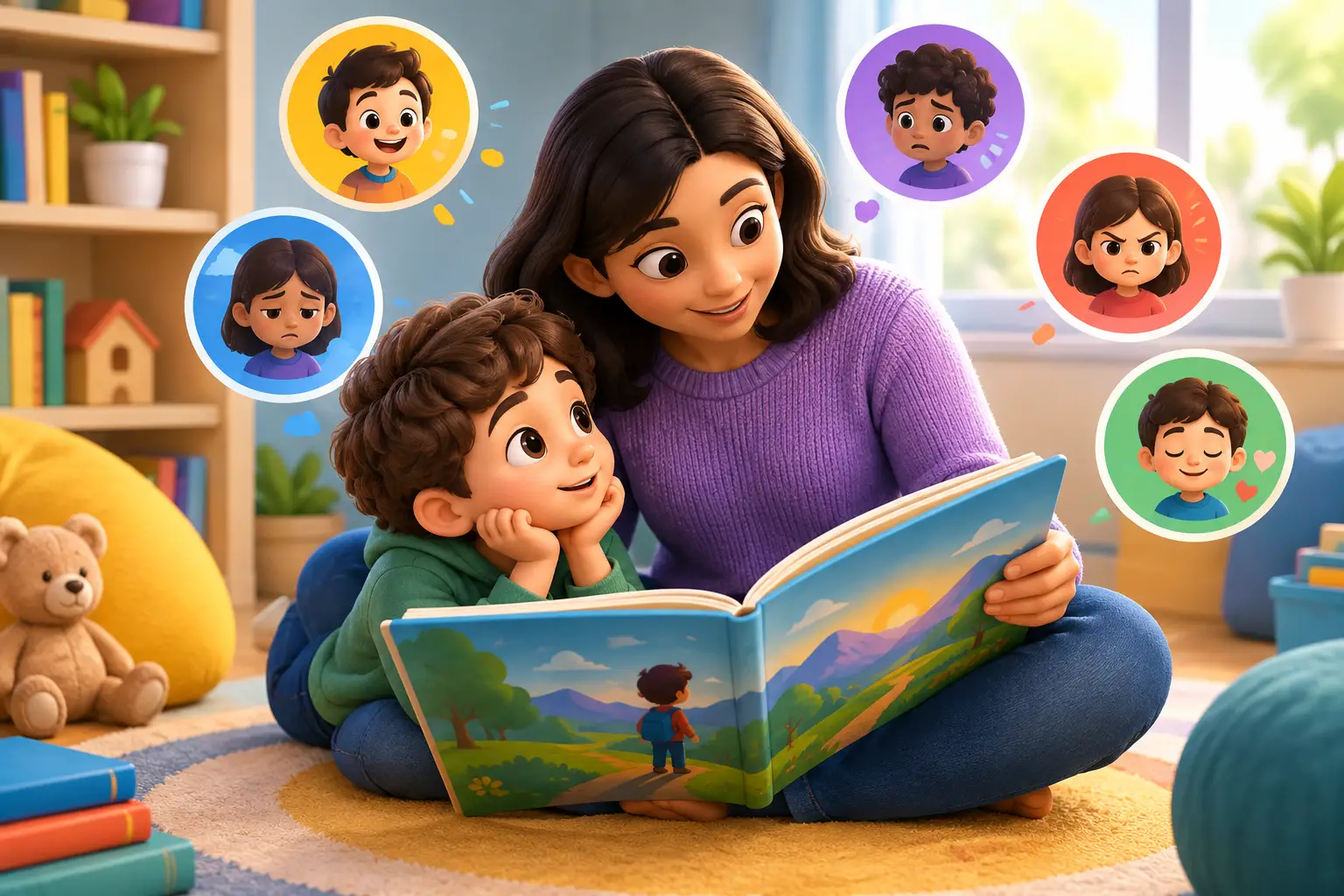
The question often arrives at bedtime, just after the lights are dimmed: can stories support emotional literacy when a child does not yet have the words for a difficult day? A familiar character who feels left out, worries about the dark, or makes a mistake can give children a safe place to notice their own feelings without being put on the spot.
For young children, emotions can be big, fast and confusing. They may know that their tummy feels tight or that they want to shout, but not recognise those sensations as worry, disappointment or frustration. Stories cannot remove every hard feeling, and they are not a substitute for professional support when a child needs it. But shared, gentle storytelling can make emotional language feel natural, comforting and possible.
Why emotional literacy begins with being understood
Emotional literacy is the growing ability to recognise feelings, name them, understand what may have caused them and respond with care. It also includes noticing that other people can feel differently from us. These are skills children build gradually, through everyday moments as much as through deliberate conversations.
A bedtime story offers a particularly calm setting for this learning. There is no right answer to give, no rush to get dressed or leave the house, and no need for a child to speak about themselves straight away. Instead, they can listen to what happens to a hero and quietly make connections of their own.
When a character says, “I felt nervous because I did not know what would happen,” a child hears a useful link between a feeling and its cause. When the character pauses, asks for help, or finds a gentle solution, the child sees that feelings can be handled rather than hidden. Repetition matters too. Hearing words such as proud, cross, lonely, relieved and hopeful across many stories helps those words become available in real life.
How stories can support emotional literacy
Stories give emotions a shape. A stormy forest can stand in for fear; a lost toy can hold the sadness of separation; a new friend can bring both excitement and shyness. This imaginative distance is helpful. A child may find it easier to say, “The little dragon was worried,” before they can say, “I was worried at nursery.”
The most helpful stories do not present difficult feelings as bad behaviour that must be fixed. They show that all feelings carry information. Anger may arrive when something feels unfair. Jealousy may appear when attention is shared. Sadness can follow a goodbye, even a small one. What matters is what a character chooses to do next.
A story also gives caregivers a softer way into conversation. Rather than asking, “Why were you upset today?”, which can feel like a lot after a long day, try a question that stays with the tale: “What do you think made the hero feel wobbly?” or “What helped them feel brave?” If your child wants to talk about their own experience, listen. If they simply want to turn the page, that is fine too.
Personalisation makes the emotional lesson feel closer
When children see themselves as the hero of a story, the emotional moment can feel especially meaningful. Their name, favourite animal, a beloved grown-up or a familiar place can turn a tale into something they want to return to. It says: you belong in stories, and your feelings belong there too.
That does not mean every personalised story needs to address a challenge directly. A child does not need a tale labelled “about anxiety” after a worrying day. Often, a small adventure is enough: a young explorer loses their map, takes a breath, accepts help from a friendly owl and finds their way home. The emotional thread is present without making the bedtime ritual feel heavy.
This is where personalised bedtime stories can be a lovely family tool. At Serene Stories, a child can be the hero of a magical adventure, allowing courage, kindness and comfort to unfold around someone who feels wonderfully familiar. For many children, being recognised in this way makes listening more active and remembering the story more likely.
Personalisation should still leave room for imagination. Children benefit from meeting characters unlike themselves as well as seeing their own experiences reflected. The aim is not to make every tale a lesson about one child, but to create a welcoming bridge between make-believe and real emotions.
What a supportive emotional story sounds like
The tone of a story matters as much as its message. A frightening problem followed by a sudden, perfect solution can make a tale exciting, but it may not offer much emotional guidance. Children often learn more from a character who has a manageable problem, feels something clearly and receives patient support.
Look for stories where feelings are named in simple, truthful language. “Mina felt disappointed when the picnic was rained off” is clearer than a vague suggestion that Mina was “not herself”. Then notice whether the character has choices. They might take a quiet moment, tell a trusted adult, apologise after shouting, practise something difficult or make a new plan.
It helps when adults in the story are calm and available, rather than always having the answer. A reassuring grown-up might say, “I can see this is hard,” before helping the child think about what comes next. That models the kind of response children need from the people around them.
There is a balance to strike. Stories should not suggest that a child must turn sadness into happiness before bed. Sometimes a comforting ending is simply a warm blanket, a loving cuddle, or the knowledge that tomorrow offers another chance. This is especially valuable when a child is grieving, adjusting to change or having frequent worries.
Turning storytime into a gentle conversation
You do not need to transform every bedtime story into a discussion. For some families, the quiet pleasure of reading together is the whole point. Yet a few unhurried moments can help a story settle more deeply.
After reading, reflect on one moment that stood out. You might say, “I noticed the hero kept going even when they felt unsure.” This gives your child emotional vocabulary without demanding a reply. If they are chatty, ask what they think the character needed most. If they are tired, a simple “That was a big feeling, wasn’t it?” may be enough.
Try not to correct a child’s interpretation too quickly. If they believe the grumpy bear was really sad, be curious: “What makes you think that?” Their answer may reveal a thoughtful understanding of behaviour, or it may simply be a playful idea. Both are part of making meaning from stories.
Bringing story language into the next day can be useful too. When a child faces a small setback, you might remind them, “This feels a bit like when your hero could not find the moonstone.” Keep it light. The purpose is to offer a familiar emotional map, not to compare away their experience.
When stories need more than a happy ending
Storytelling is supportive, but it has limits. A child who is persistently withdrawn, unusually fearful, having intense meltdowns, struggling to sleep, or speaking about hurting themselves needs attentive adult support beyond a book or app. A GP, health visitor, school staff member or qualified child mental health professional can help families understand what is going on.
Even with everyday worries, follow your child’s lead. Some children enjoy revisiting a story about separation or starting school because familiarity helps them prepare. Others may not want that theme at bedtime. Offer a different adventure, and save harder conversations for a time when they have more energy.
The strongest emotional learning comes from the relationship around the story. A child remembers the comforting voice, the pause to answer a question, and the feeling that their inner world is welcome. Night after night, those small moments can help them grow into someone who knows that feelings are not frightening visitors. They are messages worth noticing, naming and sharing with someone safe.